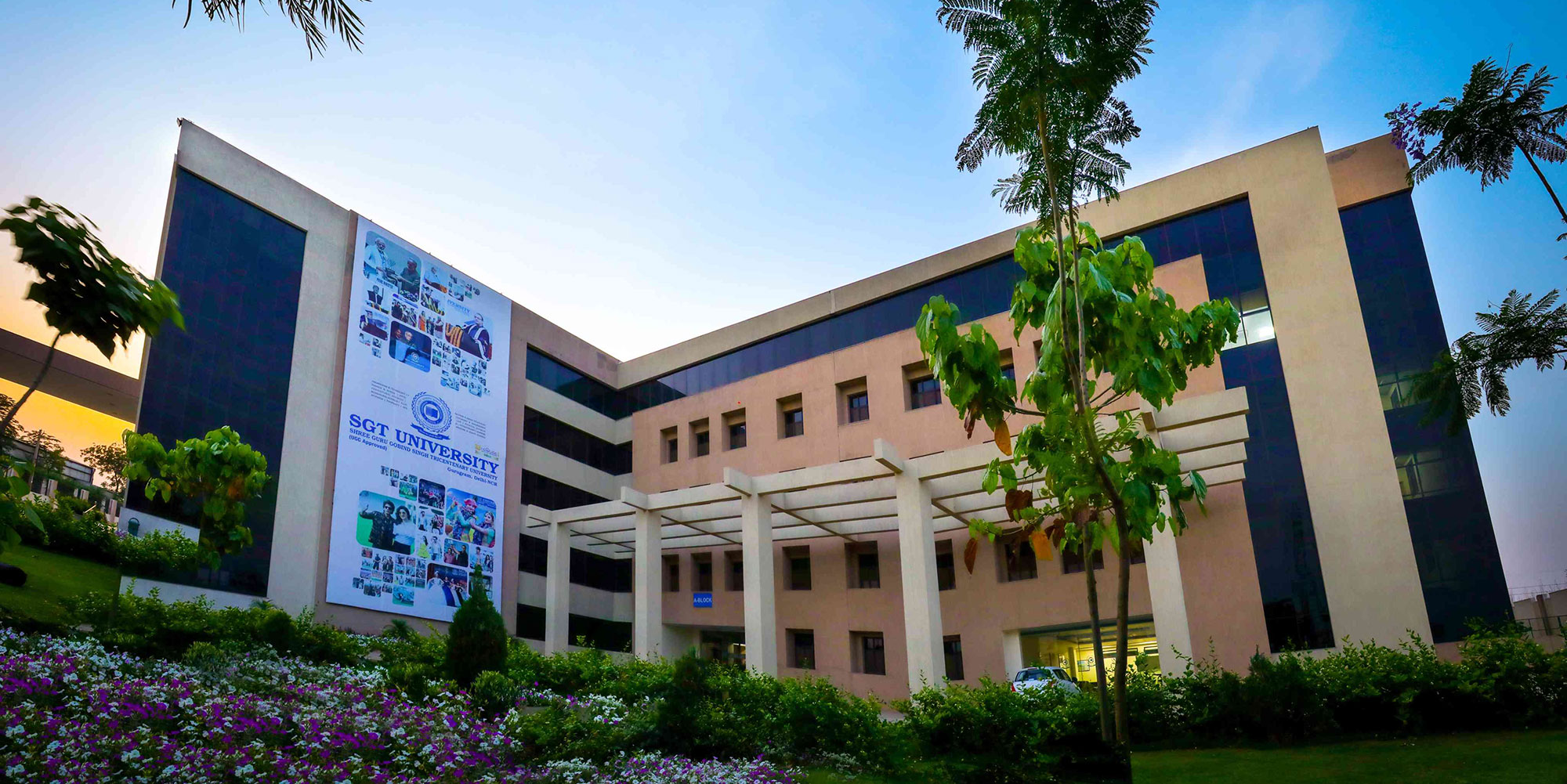
Accredited with an A+ grade by NAAC, SGT University is a distinguished institution committed to “Nurturing Future Leaders” through academic excellence, research, and industry-driven innovation.
KNOW MORE →Proudly Rated Among the Top Private Universities in India by nirf, IIRF, QS Asian University, The World University, The Impact Ranking, etc.
NAAC A+, NABL, Govt. of Haryana, Bar council of India, UGC, RCI, QS I-Gauge, ICAR, Indian Nursing Council, 20+ others
With 280+ Patents, our faculty members are recognized in Stanford University’s “Top 2% Scientists” list.
Padma Bhushan Shri Ram Bahadur Rai is our Vision
Prof. (Dr.) Hemant Verma - believe our true strength lies in vibrant community of our students, faculty, researchers, and collaborators.
Our Leadership Team comprises brilliant individuals who strongly drives governance, transparency, and accountability in the system.
Admission opens for 2026-27 session. Applying at SGT in 200+ courses is easy via online and offline modes.
KNOW MORE →Select the Faculty/ School and respective course with your details you are interested in.
200+ Programs to choose from with deep-dive counselling in each subject.
Follow step by step Admissions procedure in online or offline mode
Our 10,000+ Alumni has given us uncountable stories to be a part of the SGT.
Stay up-to-date on all SGT University examinations and related announcements.
KNOW MORE →Check the latest exam results and important notifications instantly.
Never miss an exam. View your upcoming exam schedule here.
Let you securely access all your academic awards, diplomas, degrees, and marksheets online 24/7.
Get official updates and guidance from the Controller of Examinations.
Eligible students under special circumstances can complete an online application, submit required documents, and, following verification, receive the degree available in-person or digitally.
SGT University views research and development (R&D) as a key component that propels both innovation and academic excellence.
KNOW MORE →The Central Scientific Instrumentation Facility (CSIF) serves as a cutting-edge, multidisciplinary hub equipped with state-of-the-art instrumentation.
More than 10,000+ publications on record. 780+ faculty are researching and sharing their work endlessly.
More than 280+ patents and Intellectual Property Rights (IPR) are crucial for higher education institutions
With our strong Research advisory board and over 30+ collaborations with about 100+ Consulting projects.
Experience vibrant campus life at SGT University, with advanced labs, libraries, sports facilities, innovation hubs, holistic learning, industry exposure, and global activities that prepare students for careers and professional success.
KNOW MORE →Promotes holistic student growth through mentorship, academic clubs, cultural fests, NCC, counselling, and campus support services.
Comfortable, secure, and modern hostels designed to provide a home-like environment for students.
Annual flagship event, ‘Techno-Fest’, fosters interdisciplinary collaboration, innovation, and industry-ready skills through student-led projects.
Regular workshops, seminars, and cultural activities promote learning, creativity, and engagement.
Explore SEO-friendly insights on academics, research, innovation, student experiences, and career-ready learning.
Offers excellent connectivity with campus buses and clear route signboards for easy access.
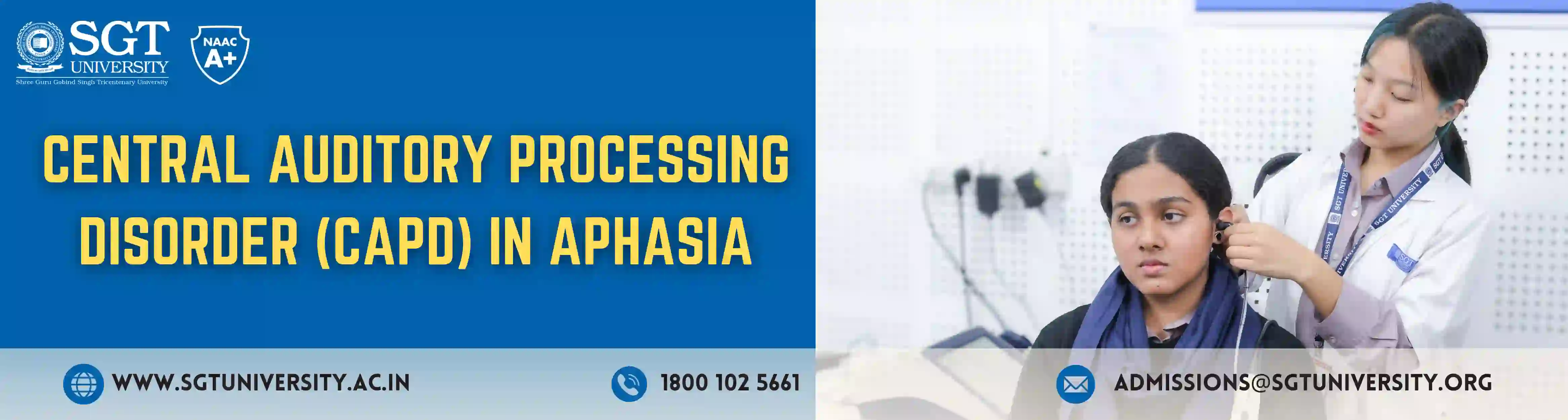
Central Auditory Processing Disorder (CAPD) involves difficulty in the brain’s ability to interpret auditory information, despite normal peripheral hearing. Aphasia, commonly caused by stroke or brain injury, affects language comprehension and expression. When CAPD coexists with aphasia, the individual may experience more severe challenges in understanding speech, especially in noisy environments or during rapid conversations.
This co-occurrence can complicate diagnosis, as both disorders may affect speech comprehension. Distinguishing whether deficits are due to linguistic impairment or auditory processing issues is crucial for effective intervention. CAPD in aphasic individuals may result in difficulty differentiating similar phonemes, following verbal instructions, or processing temporal aspects of sound.
Assessment typically includes a combination of audiological tests and language evaluations to determine the specific nature of the deficits. Intervention may involve auditory training, environmental modifications, and individualized speech-language therapy.
A deeper understanding of how CAPD affects individuals with aphasia enables more targeted and effective rehabilitation strategies.
Written By:
Ms. Swati Mahendru
Assistant Professor
Department of Audiology and Speech Language Pathology