
Radiation Safety: What Every Radiography Student Should Know
Updated on: May 30, 2025
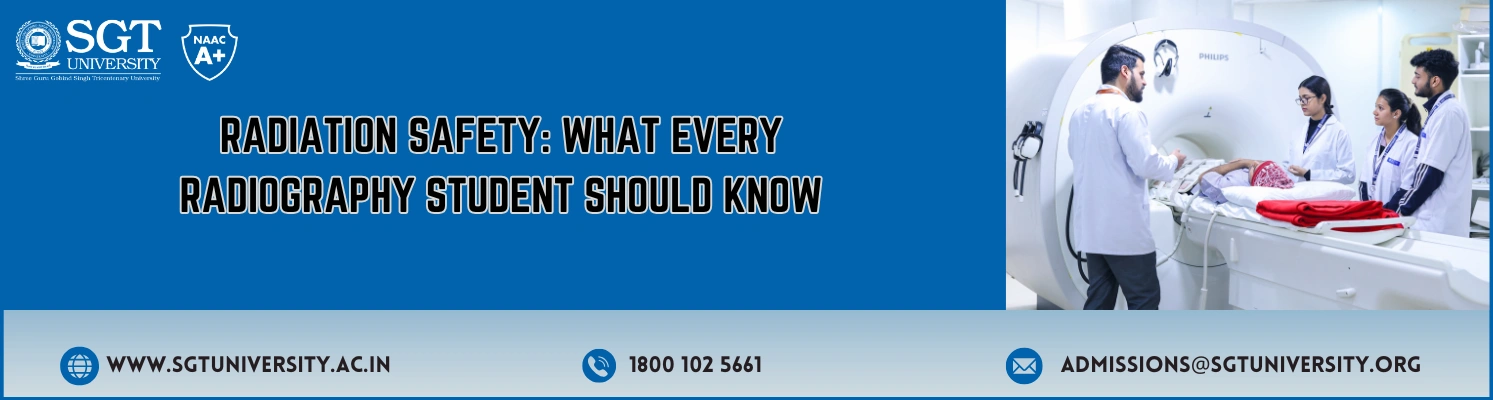
Doctors rely on radiation to look inside the body and find diseases accurately. When you have great power, you must also be responsible. While radiation safety is included in your curriculum, it’s also something you’re expected to practice as a radiographer. Maintaining safety prevents you, your patients and your peers from danger.
Why it is Important to Protect against Radiation
The flow of radiomics includes radiological images from CT, MRI, or PET scanners. Regions of interest are identified using one of two methods: experts dividing them by hand or software providing this info. Then, features of texture and shape are used to develop a large set of radiomic features. Eventually, the best features are picked and organized further using specific rules to decide whether a tumor is malignant or benign.
Even if the doses in these scans are usually safe, building up exposure can eventually cause health problems. The results can be cell harm, a higher chance of cancer, and genetic changes. Many radiographers deal with ionizing radiation daily, so it is necessary to learn about radiation protection as soon as possible.
The Fundamental Guidelines of Radiation Protection
-
Time
Exposure to radiation goes down when you’re not near the source for long. Reduce the amount of time you and the patient spend in the imaging room for imaging using fluoroscopy or portables. -
Distance
Radiation strength reduces strongly as you move away from the source. If you walk double the length from the source, the amount of ionizing radiation you get is reduced by up to 75%. Be sure to move back in the room as often as possible during imaging. -
Shielding
Cover yourself by wearing protective aprons for your chest, protective thyroid shields, lead-lined screens and gloves. It’s important to inspect all shielding devices on a regular basis.
Patient Protection is Equally Important
Since your patients may not appreciate the dangers of radiation, your task is to make sure they are protected by:
- Using the method of choosing ALARA (As Low As Reasonably Achievable)
- Making the beam point only at the goal area
- Using the right exposure factors (kVp, mAs)
Try to use lead protection such as shields for the gonads or thyroid, when available.
Learning not to repeat situations without purpose is also key. Children and pregnant women require special caution because they are affected more easily by radiation. Make sure to confirm a pregnancy before beginning procedures in the pelvic or abdominal area.
Be Familiar with Your Tools and All the Necessary Rules
Anyone learning radiography should understand:
- Dosimeters are devices worn on the body to monitor the amount of radiation each person gets.
- Radiation signs and the guidelines for entering controlled areas.
- National and organizational radiation guidelines from AERB (India), NCRP, or ICRP.
Conclusion: Safety First, Always
Radiation safety should become your everyday way of thinking. Doing it often will eventually become easy as you get more experienced. Forming strong habits at the start of your education ensures you do the right thing and are safer at work.
Written By:
Ms. Ashita Jain
Assistant Professor
Dept. of Radio-Imaging Technology