
Not getting an MBBS seat does not close the door on a career in healthcare. India faces a large and growing shortage of qualified allied health professionals, nurses, physiotherapists, pharmacists, and public health specialists, and most of these careers do not require the MBBS degree, or in many cases even a NEET score. If your real goal was to work in medicine and help people, that goal is still very much within reach.
This blog walks you through the legitimate, respected, and financially viable healthcare paths open to you after NEET, which of them need NEET and which don't, and how to choose the one that actually fits you. For most of these programmes, SGT University's allied health sciences ecosystem and associated teaching hospital offer the kind of hands-on clinical exposure that classroom-only colleges simply can't match.
Table of Contents
- The part nobody says out loud after NEET results
- Healthcare careers you can pursue without MBBS
- Which of these need NEET, and which don't?
- How to actually choose the right path
- What earning potential really looks like
- Your realistic next-step plan
- Why the right university matters more here
- FAQs
The part nobody says out loud after NEET results
For most students, MBBS was never really the goal. It was the symbol of the goal. The actual goal was some mix of these: work in a hospital, help sick people get better, have a respected and stable profession, and build a career you can be secure in for decades. MBBS is one route to that. It is not the only one.
The problem is that families treat MBBS as the whole map instead of one road on it, so when the seat doesn't come through, it feels like the map has been taken away entirely. It hasn't. India produces roughly a lakh MBBS seats against well over 20 lakh NEET aspirants. The math means the overwhelming majority of capable, hardworking students don't get in, not because they lack ability, but because the funnel is brutal by design.
So the real question isn't "did I fail?" It's "which of the other doors into healthcare fits me best?" Let's go through them properly.
Healthcare careers you can pursue without MBBS
These fall into a few clear families. Read all of them before deciding, because most students only know two or three of these exist.
1. Nursing
Nursing is the single largest healthcare profession in the world and one of the most employable degrees in India. A B.Sc Nursing is a four-year degree that puts you directly on the hospital floor in clinical care, with clear progression into critical care, operation theatre, specialised units, teaching, administration, and international roles. Demand consistently outstrips supply, and migration pathways to the Gulf, UK, Ireland, Canada, and Australia are well established. The work is unambiguously clinical, you are in the room where care happens.
2. Allied Health Sciences, the most underrated category in Indian healthcare
This is the family most NEET students have never heard of, and it's the one worth studying hardest. Allied Health is the technical and diagnostic backbone of every hospital. No modern hospital runs without these professionals.
| Programme (typical B.Sc) | What you actually do | Where you work |
|---|---|---|
| Medical Laboratory Technology (MLT) | Run blood, tissue, and pathology diagnostics | Labs, hospitals, diagnostics chains |
| Radiology & Imaging Technology | Operate X-ray, CT, MRI, ultrasound | Radiology departments, imaging centres |
| Operation Theatre Technology (OTT) | Assist and manage surgical procedures | Surgical suites, OTs |
| Anaesthesia Technology | Support anaesthesia delivery and monitoring | Operation theatres, ICUs |
| Cardiac Care / Cardiovascular Technology | Run ECGs, cath-lab support, cardiac diagnostics | Cardiology units |
| Dialysis Technology | Manage dialysis for renal patients | Nephrology, dialysis centres |
| Optometry | Eye testing, vision correction, eye-care diagnostics | Eye hospitals, optical practice |
| Emergency & Trauma Care Technology | Frontline emergency and critical response | ER, ambulance, trauma units |
These programmes are typically three to four years, highly hands-on, and lead to roles that are hard to automate away because they require trained human judgement at the point of care. The scope is expanding, not shrinking.
3. Physiotherapy (BPT)
A Bachelor of Physiotherapy (BPT) is a four-and-a-half-year professional degree (including internship) in rehabilitation and movement science. Physiotherapists treat sports injuries, post-surgical recovery, neurological conditions, chronic pain, and geriatric care. It's one of the few healthcare careers where independent private practice is genuinely viable, alongside hospital, sports, and rehab roles. Demand is rising with an ageing population and growing sports-medicine awareness.
4. Pharmacy
Pharmacy runs from D.Pharm and B.Pharm through Pharm.D (a six-year clinical doctorate). This is not just "working at a chemist's shop." The field spans clinical pharmacy inside hospitals, drug manufacturing and quality control, pharmaceutical R&D, regulatory affairs, and pharmacovigilance. India is a global pharma manufacturing hub, and the industry side of pharmacy employs at scale. You can explore the full range at SGT College of Pharmacy.
5. AYUSH and Dental (these do require NEET)
If you have a NEET score but not enough for MBBS, don't overlook these, because they are still doctor-track qualifications:
- BDS — Bachelor of Dental Surgery. You become a dentist, addressed as "Dr."
- BAMS (Ayurveda), BHMS (Homoeopathy), BUMS (Unani), and BNYS (Naturopathy & Yogic Sciences) are full medical-system degrees with clinical practice rights within their systems.
If your NEET score is decent but just short of an MBBS seat, these deserve serious consideration before you write off the year.
6. Life sciences, biotechnology, and public health
If your interest is in the science of medicine more than bedside care, look at B.Sc Biotechnology, Microbiology, Biomedical Science, Genetics, and Public Health (BPH). These lead toward research, diagnostics, the biotech industry, epidemiology, hospital administration, and health policy. Public health in particular has grown sharply in relevance and hiring since 2020.
7. Nutrition, dietetics, and psychology
B.Sc Nutrition & Dietetics leads to clinical dietician roles in hospitals, sports nutrition, and wellness. Psychology (with postgraduate specialisation such as an M.Phil in Clinical Psychology) leads toward clinical and counselling psychology, a field with rapidly rising demand and still-low supply in India.
Which of these need NEET, and which don't?
This is the single most confusing point for students, so here it is plainly:
| Requires NEET | Usually does NOT require NEET |
|---|---|
| MBBS, BDS, BAMS, BHMS, BUMS, BNYS (the doctor-track and AYUSH degrees) | Allied Health Sciences (MLT, Radiology, OTT, Anaesthesia Tech, Cardiac Care, Dialysis, Optometry), Physiotherapy (BPT), Pharmacy, and life-science, nutrition, and psychology degrees |
Nursing is the important exception to explain carefully. NEET is not mandatory for every B.Sc Nursing programme. It is generally required for central institutions (such as AIIMS and JIPMER), some deemed universities, and the Military Nursing Service. Many state and private nursing colleges instead admit through their own entrance exams or on the basis of Class 12 marks in Physics, Chemistry, and Biology.
Important caveat: admission rules differ by state, by university, and by year, and they do change. Always confirm the current-year eligibility and entrance requirement directly with the institution before you assume. Don't make a life decision on a general rule when the specific rule is one phone call away.
How to actually choose the right path
Skip the "top 10" listicles. Ask yourself four questions:
- Do I want to be at the bedside, in a lab, or behind the science? Bedside → Nursing, BPT, OTT, Emergency Care. Lab and diagnostics → MLT, Radiology, Cardiac Tech. Science and industry → Biotech, Pharmacy, Public Health.
- Do I want a clinical title, or do I care more about the work than the title? If the "Dr." prefix genuinely matters to you and you have a NEET score, look hard at BDS and AYUSH. If the work matters more than the label, allied health and nursing open up much faster.
- Do I want to work abroad? Nursing, physiotherapy, and several allied-health fields have the clearest international migration pathways. If leaving India is part of the plan, weight these higher.
- What can I actually sustain for a decade? Every one of these careers involves long hours and real responsibility. Pick the one whose daily work you can respect yourself doing, not just the one with the best-sounding name.
What earning potential really looks like
Be careful with anyone who throws confident salary figures at you, including glossy college brochures. Real starting pay depends on the role, the city, the employer, whether you're in a government or private setup, and your own skill. What is true in general:
- Entry-level allied-health and nursing salaries in India typically start modest and rise meaningfully with specialisation, experience, and international moves.
- Fields with international demand (nursing, physiotherapy, certain diagnostics) can significantly outpace their India-only equivalents once you qualify to work abroad.
- Pharmacy and biotech open industry salary bands that clinical roles don't, especially in R&D, regulatory, and quality functions.
If a specific number matters to your decision, get it from people currently doing the job in your target city, not from a marketing page.
Your realistic next-step plan
- Confirm your NEET status honestly. If your score qualifies you for BDS or AYUSH counselling and that path appeals to you, participate in the counselling rounds before assuming it's out of reach.
- Shortlist three programmes across different families above, so you're not emotionally staked on a single outcome.
- Check current-year eligibility and dates for each, directly with the institution. Deadlines end more careers quietly than low scores do.
- Visit the campus and, critically, the hospital. For any healthcare programme, ask whether the institution has an attached teaching hospital where you'll actually get clinical exposure. Classroom-only healthcare training is a warning sign.
- Decide on fit, not prestige. The best programme for you is the one whose work you'll respect doing at 7 a.m. on a hard day.
Why the right university matters more here
In healthcare specifically, where you train is not a status question, it's a competence question. You need real patients, real equipment, and real clinical hours. That's why an institution with its own teaching hospital and dedicated schools of nursing, allied health sciences, physiotherapy, pharmacy, and dental sciences on one campus gives you something a standalone college can't: exposure to actual clinical settings while you learn.
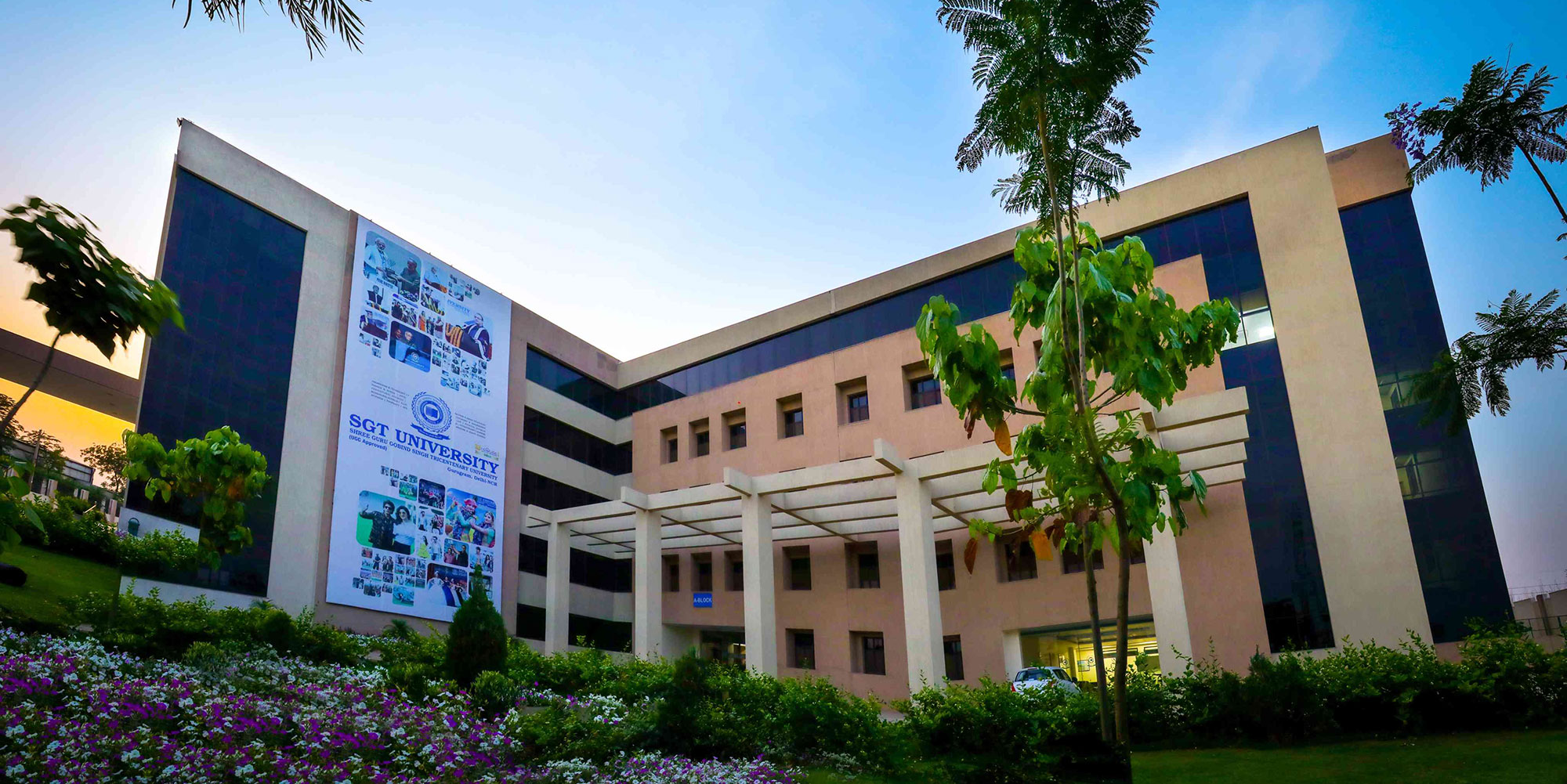
SGT University in Gurugram, Delhi NCR, is structured this way, a NAAC A+ accredited, health-sciences-heavy university with an associated teaching hospital and multiple health-science schools under one roof. Physiotherapy students train in an active rehabilitation setting, allied health and nursing students rotate through real clinical departments, and pharmacy and dental students gain supervised, hands-on exposure rather than relying on simulation alone. If you're mapping options in the NCR region, it's worth putting on your shortlist to compare directly against your other choices on the four criteria above.
Ready to explore your options? Apply now at SGT University and begin your journey toward a rewarding healthcare career.
Frequently Asked Questions
Q.1 Can I have a career in healthcare without an MBBS degree?
Yes. Nurses, physiotherapists, lab and imaging technologists, operation-theatre technologists, dieticians, and pharmacists all work inside hospitals in clinical or clinical-support roles without an MBBS. Healthcare is a large ecosystem, and MBBS is only one profession within it.
Q.2 Which medical courses do not require NEET?
Allied health sciences (MLT, radiology, operation theatre technology, anaesthesia technology, cardiac care, dialysis, optometry), physiotherapy (BPT), pharmacy (B.Pharm, D.Pharm, Pharm.D), and life-science, nutrition, and psychology degrees generally do not require NEET. Doctor-track degrees, MBBS, BDS, and AYUSH courses, do.
Q.3 What should I do if I didn't get an MBBS seat?
First, honestly check whether your NEET score qualifies you for BDS or AYUSH counselling. If not, shortlist three strong alternatives across nursing, allied health, physiotherapy, or pharmacy, confirm current-year eligibility and deadlines with each institution, and choose based on fit rather than prestige. Acting quickly protects your academic year.
Q.4 Can I become a doctor without NEET?
You cannot become an allopathic (MBBS) doctor without qualifying NEET, since NEET is the mandatory gateway. However, you can build a full clinical career in nursing, physiotherapy, or allied health without NEET, and these professionals are essential to patient care. AYUSH doctor-track degrees still require NEET.
Q.5 Is B.Sc Nursing possible without NEET?
In many cases, yes. NEET is generally required for B.Sc Nursing at central institutions like AIIMS and JIPMER, some deemed universities, and the Military Nursing Service. Many state and private nursing colleges instead admit through their own entrance exams or on Class 12 PCB merit. Always confirm the requirement with the specific college, as rules vary by state and year.
Q.6 Which paramedical or allied health course has the best scope?
There is no single "best," because scope depends on your interest. Radiology and imaging, medical laboratory technology, operation theatre technology, and cardiac care technology all have strong, growing demand in hospitals and diagnostics chains. Choose based on whether you prefer diagnostics, surgical support, or critical care, not just on which sounds most impressive.
Q.7 What is the difference between allied health sciences and MBBS?
MBBS trains you as a physician who diagnoses and prescribes. Allied health trains you as a specialist in a specific clinical or diagnostic function, imaging, lab testing, surgical support, rehabilitation, and so on. Both are essential; hospitals cannot run without either.
Q.8 Is physiotherapy (BPT) a good career after 12th?
Yes. BPT is a professional degree with rising demand driven by an ageing population, sports medicine, and growing rehabilitation awareness. It offers hospital roles, sports and rehab settings, and one of the few healthcare paths where independent private practice is genuinely viable.
Q.9 Which healthcare course has the highest demand abroad?
Nursing has the most established international migration pathways, followed by physiotherapy and several diagnostic and allied-health fields. If working abroad is a priority, these deserve extra weight in your decision, though you'll need to clear the destination country's licensing requirements.
Q.10 Can I do BDS with a low NEET score?
BDS requires a valid NEET qualification and admission through counselling, but the cut-offs for BDS are typically lower than for MBBS. If your NEET score is decent but just short of an MBBS seat, BDS is a genuine doctor-track option worth exploring in the counselling rounds.
Q.11 Is pharmacy a good career option after 12th?
Yes. Pharmacy spans clinical hospital roles, drug manufacturing and quality control, R&D, regulatory affairs, and pharmacovigilance. As a global pharma manufacturing hub, India offers large-scale industry employment in addition to clinical and community pharmacy roles.
Q.12 What healthcare courses can PCM (non-Biology) students take?
Students without Biology can look at biomedical engineering, pharmacy (in many institutions), biotechnology (where accepted), hospital administration, health informatics, and public health. Most core clinical and allied-health programmes, however, require Physics, Chemistry, and Biology, so check each programme's subject requirement carefully.
Q.13 Should I drop a year to reattempt NEET, or take an alternative course now?
That's a personal trade-off, not a free option. A drop year costs twelve months with no guarantee. It can be the right call if your score was close and your preparation had a clear, fixable gap. It's the wrong call if it's mainly about status or family pressure while a strong non-MBBS pathway is already available to you. Be honest with yourself about which one it is.
Q.14 Do allied health and nursing careers pay well in India?
Starting salaries are typically modest but rise meaningfully with specialisation, experience, and international moves. Fields with global demand, such as nursing and physiotherapy, can pay significantly more once you qualify to work abroad. For accurate figures, speak to professionals currently working in your target city and role.
Q.15 Can I move into MBBS or a PG medical path later after an allied health degree?
An allied health or nursing degree does not automatically convert into MBBS; to pursue MBBS you would still need to qualify NEET and secure a seat. However, each of these fields has its own strong postgraduate and specialisation ladder, so you can advance significantly within your chosen profession without switching to MBBS.
Q.16 Which healthcare careers can I pursue after 12th with PCB but without NEET?
With Physics, Chemistry, and Biology, and without NEET, you can pursue allied health sciences, physiotherapy, pharmacy, biotechnology, microbiology, nutrition and dietetics, and, at many state and private colleges, B.Sc Nursing. These cover most of the clinical and diagnostic roles inside a hospital.
Q.17 Are AYUSH courses (BAMS, BHMS) a good alternative to MBBS?
AYUSH courses are full medical-system degrees with clinical practice rights within their respective systems, and they require a valid NEET qualification. They can be a strong option if you're drawn to Ayurveda, Homoeopathy, Unani, or Naturopathy specifically, rather than as a fallback chosen only because MBBS didn't work out. Research the actual practice scope before committing.