
BSc. Nursing vs GNM: Which Course is Better in 2026
Updated on: September 12, 2026
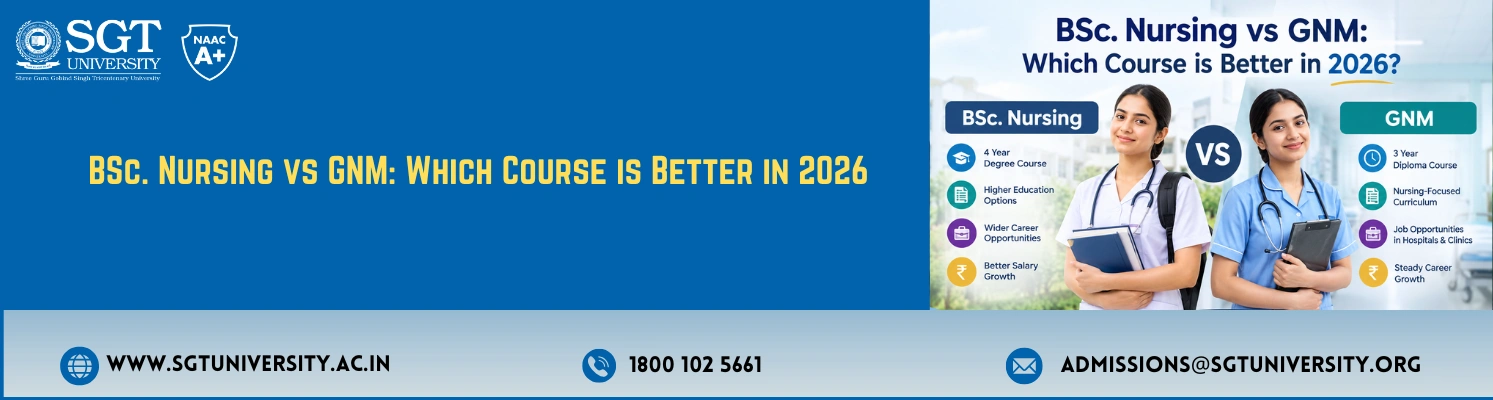
Introduction
Students who want to make a career in healthcare often get confused between BSc Nursing and GNM (General Nursing and Midwifery). Both are popular nursing courses, but they are quite different in qualification level, duration, syllabus, career growth, salary, and future opportunities. Because of the increasing demand for nurses in India and abroad, choosing the right course has become very important. Students want clear information on which program gives better jobs, higher salary, faster career growth, and long-term stability. This comparison will help you understand the main differences between BSc. Nursing and GNM in terms of eligibility, duration, syllabus, salary, government job chances, and career pathway in 2026.
What is a BSc. Nursing?
BSc. Nursing is a 4-year undergraduate degree program. It gives students complete knowledge and training in nursing science. The course covers important subjects like anatomy, physiology, patient care, healthcare management, clinical procedures, and community health. It prepares students for professional nursing roles in hospitals, clinics, research centers, and public health departments. BSc Nursing combines strong theory with a lot of practical training and real clinical experience in hospitals.
What is GNM?
GNM (General Nursing and Midwifery) is a 3-year diploma-level nursing course. It focuses on basic nursing education, patient care, midwifery, and community healthcare. The course is designed to train students for entry-level nursing positions in hospitals, nursing homes, and healthcare centres. GNM is considered a shorter and more affordable option compared to BSc. Nursing, making it a popular choice for students who want to enrol in the nursing profession quickly.
Difference Between a BSc. Nursing and GNM
| Features | BSc. Nursing | GNM |
|---|---|---|
| Course Type | Undergraduate Degree | Diploma |
| Duration | 4 Years | 3 Years |
| Qualification Level | Higher | Moderate |
| Career Growth | Excellent | Limited |
| Salary Potential | Higher | Moderate |
| Higher Studies | Strong Opportunities | Limited Opportunities |
| Global Recognition | Better | Moderate |
| Clinical Exposure | Extensive | Moderate |
Eligibility Criteria
BSc. Nursing Eligibility
To apply for BSc. Nursing, students generally need:
- 10+2 qualification
- Physics, Chemistry, and Biology as compulsory subjects
- Minimum marks as required by the university / college
- Some colleges may also require entrance exams
GNM Eligibility
For GNM admission, students need:
- 10+2 from a recognized board
- Science stream is preferred in most colleges
- Minimum percentage marks may vary from college to college
GNM eligibility is usually more flexible compared to BSc. Nursing.
Course Duration
BSc. Nursing Duration
The duration of BSc. Nursing is 4 years.
The course includes:
- theoretical learning
- hospital training
- clinical practice
- internships
GNM Duration
GNM generally takes 3 years to complete, including practical training. Since GNM is shorter, students may enter the workforce earlier. However, a BSc. in Nursing offers stronger long-term career prospects.
Course Subjects
BSc. Nursing
BSc. Nursing includes:
- Anatomy
- Physiology
- Pharmacology
- Medical-surgical Nursing
- Community Health Nursing
- Child Health Nursing
- Mental Health Nursing
- Midwifery
- Nursing Research
- Healthcare Management
The curriculum is broader and more advanced.
GNM Subjects
GNM focuses mainly on:
- basic nursing
- patient care
- midwifery
- community healthcare
The academic depth is comparatively lower than that of a BSc. Nursing.
Skill Development
BSc. Nursing
BSc Nursing focuses on developing advanced professional skills. Students gain:
- advanced patient-care skills
- healthcare management knowledge
- clinical decision-making ability
- leadership and team management skills
- research and evidence-based nursing understanding
This makes BSc Nursing graduates more suitable for higher responsibilities and specialized roles.
GNM
GNM’s primary focus is on foundational nursing skills. Students develop:
- basic nursing care
- patient support and comfort
- emergency assistance
- primary healthcare services
GNM equips students with essential hands-on skills needed for entry-level nursing positions.
Career Opportunities after BSc. Nursing
BSc. Nursing graduates have access to a various job roles due to their advanced knowledge and training. They can work as:
- Staff Nurse
- ICU Nurse / Critical Care Nurse
- Nursing Officer
- Clinical Nurse Specialist
- Military Nurse
- Healthcare Administrator
- Nurse Educator
- Community Health Officer
- Employment Opportunities
Students, after completing BSc. Nursing can find job roles in various domains, including:
- Private Hospitals
- Government Hospitals s
- Research Organizations
- Healthcare NGOs
- International Healthcare Institutions
BSc. Nursing opens doors to better job profiles, higher positions, and stronger career growth compared to diploma courses.
Career Opportunities after GNM
GNM graduates commonly work as:
- Staff Nurse
- Home Care Nurse
- Community Nurse
- Clinical Assistant
While job roles / opportunities are good, career advancement is comparatively slow.
Salary Comparison
BSc. Nursing Salary
| Experiential Level | Average Salary |
|---|---|
| Fresher | ₹3–4 LPA |
| Mid-level | ₹5–7 LPA |
| Experienced | ₹8+ LPA |
Specialized nurses may earn significantly more.
GNM Salary
| Experiential Level | Average Salary |
|---|---|
| Fresher | ₹₹2–3 LPA |
| Mid-level | ₹4–5 LPA |
| Experienced | ₹6+ LPA |
BSc. Nursing generally offers better salary growth.
Government Job Opportunities
BSc Nursing Government
BSc Nursing graduates have better opportunities for government jobs. They can apply for various prestigious positions such as:
- AIIMS Nursing Officer
- Military Nursing Services (MNS)
- ESIC Hospitals
- Railway Hospitals
- Government Medical Colleges
- Public Health Departments
- State Health Services
GNM Government
GNM diploma holders can also apply for staff nurse positions in government hospitals and health centres. However, many higher-level and better-paying government nursing posts prefer or require a BSc Nursing degree.
Higher Education Opportunities
After BSc. Nursing
Students can pursue:
- MSc. Nursing
- MBA Hospital Management
- MPH
- PhD Nursing
- Clinical Specializations
After GNM
GNM students often pursue:
- Post-basic BSc. Nursing
- Certification Courses
- Diploma Specializations
Which Course has Better Future Scope?
In 2026, BSc. Nursing is generally considered the better option for long-term career growth because:
- It is a degree program
- offers better salaries
- provides stronger career growth
- improves international opportunities
- supports higher education
- increases the chances of government jobs
GNM remains a good option for students who:
- want shorter course duration
- have budget constraints
- wish to start working early
BSc. Nursing vs GNM: Which is Better?
The better course depends on career goals.
Choose BSc. Nursing if you want:
- Long-term career growth
- Higher salary opportunty
- Global-level exposure
- Advanced healthcare roles
- Postgraduate education
Choose GNM if you want:
- Shorter duration
- Quicker employment
- Lower educational cost
However, the overall career growth and long-term future opportunities are comparatively stronger in a BSc. Nursing.
Why do Students Prefer BSc. Nursing in 2026?
Healthcare careers are evolving rapidly. Hospitals and healthcare organizations prefer degree-qualified nursing professionals.
BSc. Nursing graduates often get:
- better promotions
- higher salary packages
- administrative opportunities
- specialized healthcare roles
- international placements
This makes BSc. Nursing is one of the most preferred healthcare courses after 12th.
Conclusion
Both BSc. Nursing and GNM are valuable courses that play an important role in the healthcare sector and offer strong career opportunities. However, BSc. Nursing stands out with better long-term prospects, higher salary opportunities, and more career opportunities. While GNM is a good option for students who want to enter the workforce quickly, BSc. Nursing is a better choice for those seeking strong career growth, leadership roles, higher studies, and better government job opportunities. In 2026 and beyond, students who aim for a successful and progressive nursing career are generally advised to pursue BSc. Nursing.
Frequently Asked Questions
Q1. Which is better: BSc. Nursing or GNM?
BSc Nursing is generally better for long-term career growth, salary potential, and higher education opportunities.
Q2.Is GNM easier than BSc. Nursing?
GNM is shorter and comparatively less academically intensive than BSc Nursing.
Q3.Can GNM students pursue a BSc. Nursing later?
Yes, GNM students can pursue Post Basic BSc Nursing.
Q4. Which course offers a higher salary?
BSc. Nursing programme generally offers higher salary opportunities.
Q5. Is BSc. Nursing good for government jobs?
Yes, BSc. Nursing graduates are eligible for many government healthcare positions.
