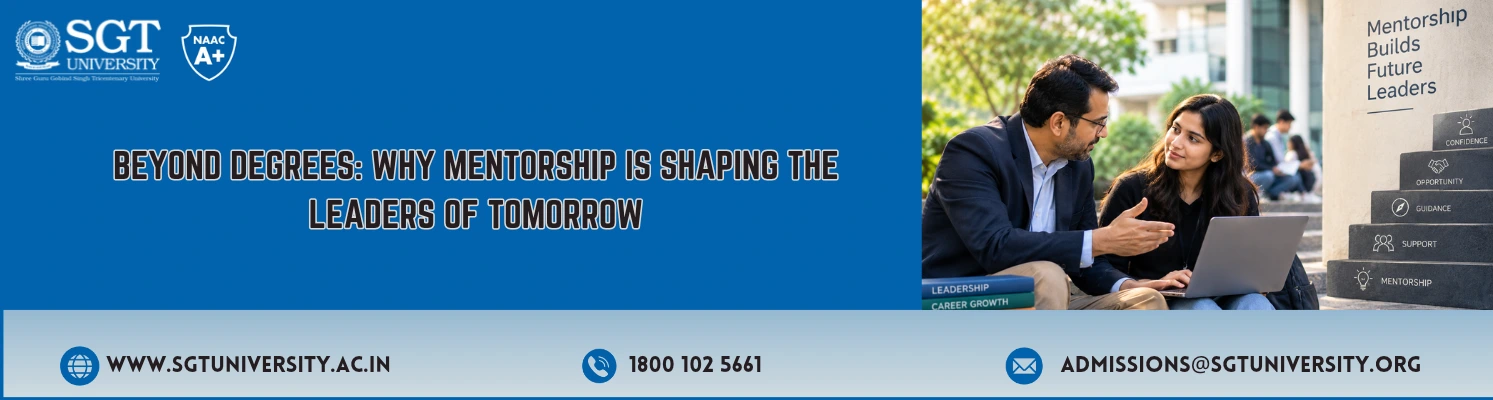
Beyond degrees: why mentorship Is shaping the leaders of tomorrow
Updated on: October 27, 2026
Think back to the last time you had to make a big decision. That could be deciding your academic stream after class ten, or you thoughtfully deciding what university application forms to fill out. This feeling of standing at a major crossroads, and wondering if you're making the right choice, is certainly a milestone that nearly everyone, student and parent goes through. For decades, society has had a simple, conventional formula for success: attend a reputable school, memorize the prescribed textbooks, achieve high marks and secure a formal degree. But the world outside the classroom has changed completely. A degree is currently just a ticket to get your foot in the door.
To truly survive and thrive and lead in a world where technological shifts happen at the speed of light and global competition is intense, you need something much more enduring a guide. Strolling through modern schoolroom's silent pressures After you finish your board exams and enter the portals of a university campus, you walk in with a portfolio of ambitious goals and great potential. This is especially hard for those who want to go into rapidly changing and in-demand fields such as engineering and technology. But all those dreams come with a heavy load of unspoken stress for many young people. There is the relentless pressure to perform academically, widespread confusion about which specialized career path best suits one's natural strengths, the fear of falling short of parental expectations, and an internal anxiety about whether one is truly capable of succeeding. This is where the true impact of dedicated mentorship comes into play, when traditional, purely instructional education systems reach their limits.
A mentor isn't someone standing at a whiteboard, lecturing the same lectures over and over and taking attendance. A true mentor looks past the immediate academic performance and sees what a student can become even when the student doesn't have the confidence to see it themselves. Mentors will sit down and listen to complex thoughts and help sort through overwhelming choices. Rather than giving quick, prescriptive answers, they will share their personal experiences, own up to their past mistakes and impart practical wisdom they've learned over the years. This human connection helps learners realize they are not alone on their professional and personal journey.
Human connection in a hyper-connected world 2
We live in a world of social media and digital platforms, with edited highlights presented as perfection. Students look at their phones at classmates being starting companies, landing competitive internships and releasing complex software applications. In this high-visibility environment, it's easy for young minds to feel left out or overwhelmed with self-doubt. These are formative years when students need more than technical lectures on specialized subjects, they need human contact and steady guidance. They need kind mentors to tell them, 'you're not alone', 'everyone grows at his or her own pace', 'making mistakes is part of growing professionally' and 'setbacks are learning opportunities, not destinations. A thoughtful conversation with an experienced mentor can completely change a student's perspective, turning anxiety into disciplined confidence.
The evolving role of the educator
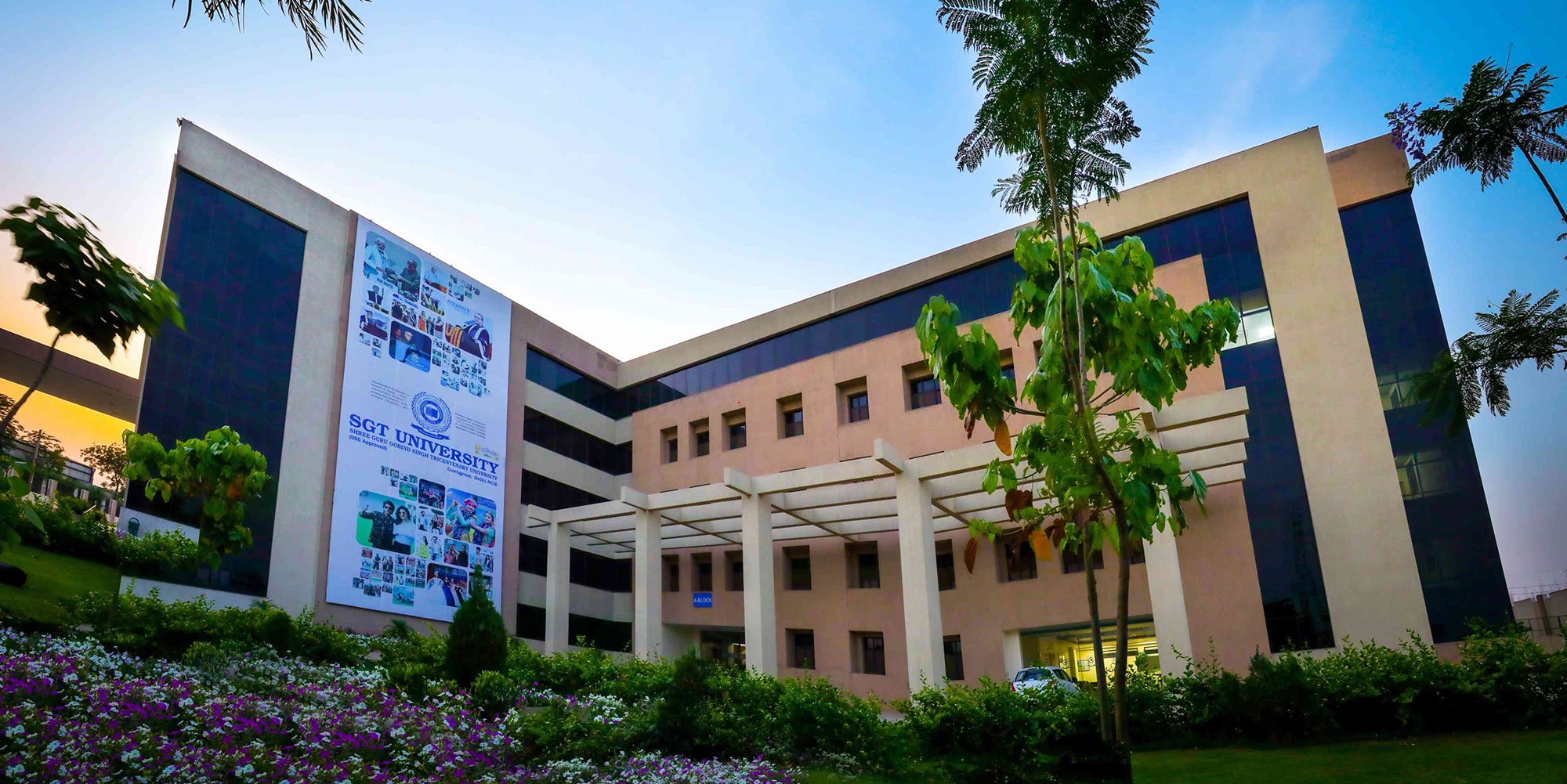
As information becomes universally accessible with search engines and online resources, the role of educators must naturally evolve. Teachers can no longer just be information distributors. What digital databases and automated tools can't provide is empathy, emotional intelligence, career foresight and real-world wisdom. This is embedded into the academic framework of institutions such as SGT University in Gurugram. The learning process at the School of Engineering and Technology (SOET) is way beyond the normal curricular requirements. Faculty members don't just teach programming frameworks, circuit design or mechanical principles, but rather serve as personal advisers that help students map out their long-term career trajectory.
The true impact of an educational institution or a faculty member can't be solely measured by corporate placement statistics or classroom grade distributions, but rather in how the character, ethical grounding and self-belief is cultivated within the student body. A great mentor serves as an essential bridge, connecting a student's raw talent on one end with the professional confidence needed to achieve meaningful goals on the other.
Overcome the reluctance to seek guidance
There are many young scholars who are reluctant to seek assistance, thinking that to ask for guidance is to be incompetent or to lack independence. But if you look at high achievers in any field - be they top athletes, industry leaders or pioneering researchers - you will find that almost all of them had experienced mentors working behind the scenes. Asking for advice is a strategic strength, it shows the maturity to learn from the experiences of those who have already walked similar paths. Students at SOET at SGT University are encouraged to engage with faculty and visiting industry professionals right from the first day of their course in the academic environment. The right advisor does more than direct students towards new professional opportunities, but equips students with discipline, integrity and resilience to successfully navigate those opportunities.
Vision for the future
As the country takes on an increasingly significant role in the world of technology, innovation and knowledge-based industries, the way we educate and guide young professionals is becoming increasingly important. Academic credentials set the basic grounds and initial footholds, mentorship provides the wider perspective that allows for significant advances. As prospective students look forward to their next step into higher education, it's critical to select an environment that sees students as people. If you want to be a leader of tomorrow, surround yourself with inspiring mentors, actively seek constructive guidance and understand that character development is as important as technical preparation.
Written By:
Shweta Prakash
Assistant Professor
School of Engineering and Technology (SOET) SGT University, Gurugram