Why should I choose a PhD in Medical Microbiology? Future Research Opportunities in Medical Microbiology.
Updated on: July 28, 2025
Medical Microbiology is a branch of the tree ‘microbiology’ that deals with the study of microorganisms that cause infections and various diseases that impact human health. The Doctor of Philosophy (PhD) in Medical Microbiology equips students with the knowledge of research and research methodologies in microbial pathogens, immunology, epidemiology and public health, and antimicrobial resistance.
This blog on PhD Medical Microbiology covers the information of the best microbiology PhD college in India and what makes the college the best choice for a PhD student passionate aboutMedical Microbiology, the microbiology PhD scope, research topics, and how PhD Microbiology differs from M.Sc. Microbiology, careers after PhD Microbiology, and salary after PhD Microbiology.
Table of Contents:
- Why choose a PhD in Medical Microbiology?
- PhD in Microbiology v/s MSc in Microbiology
- The best university for the course in India: SGT University
- Eligibility criteria for the course
- Future research opportunities
- Career paths after PhD in Medical Microbiology
- Conclusion
- FAQs
Why choose PhD in Medical Microbiology?
A PhD in Medical Microbiology takes a lot of effort, understanding of the course, and analytical thinking skills. It is necessary for the students to be familiar with their interests and passion in the field and be willing to dedicate a few years to a PhD. Here’s why and when you should consider opting for a PhD in medical microbiology.
- You are passionate about studying microbiology deeply and thoroughly.
- You have an interest in the field of research in the microscopic world of microorganisms and diseases.
- You are aiming to contribute to new inventions of vaccines, diagnostic tools, and methodologies to prevent getting infected by microbes.
- The idea of dealing with the microbial world sounds fascinating and intriguing to you.
- Further targeting to work as a pathologist, clinical research associate, or educator in microbiology.
PhD in Microbiology v/s MSc in Microbiology
After completing MSc Microbiology, the primary expected question that arises in any student’s life is whether they should continue studying in the field and pursue a PhD or not. The basic question that should be asked upon this thought should be, ‘Am I eager to dedicate my 3 years (or more) to a PhD? Do I fancy research?’ Thereafter, to clear up the dilemmas, the students must know the difference between the two, such questions as what kinds of jobs one can pursue after completing a master’s in medical microbiology, what salary they can expect and what all things change after doing a PhD.
| Parameters | M.Sc. in Medical Microbiology | Ph.D. in Medical Microbiology |
|---|---|---|
| Duration | 3 years | 3-6 years |
| Depth of knowledge | Intermediate | Specialized and advanced |
| Eligibility | Bachelor’s in the concerned specialty | Masters in the concerned specialty |
| Career opportunities | Lab technician, analyst, research assistant, teaching assistant. | Pathologist, clinical research associate, researcher, scientist |
| Initial salary | Ranges from INR 2.5 to INR 5 | Ranges from INR 2.5 to INR 12 |
| Title | No such title | Doctor (Dr.) Before the first name |
| Research publication | Not mandatory | Mandatory |
The best university for the course in India: SGT University
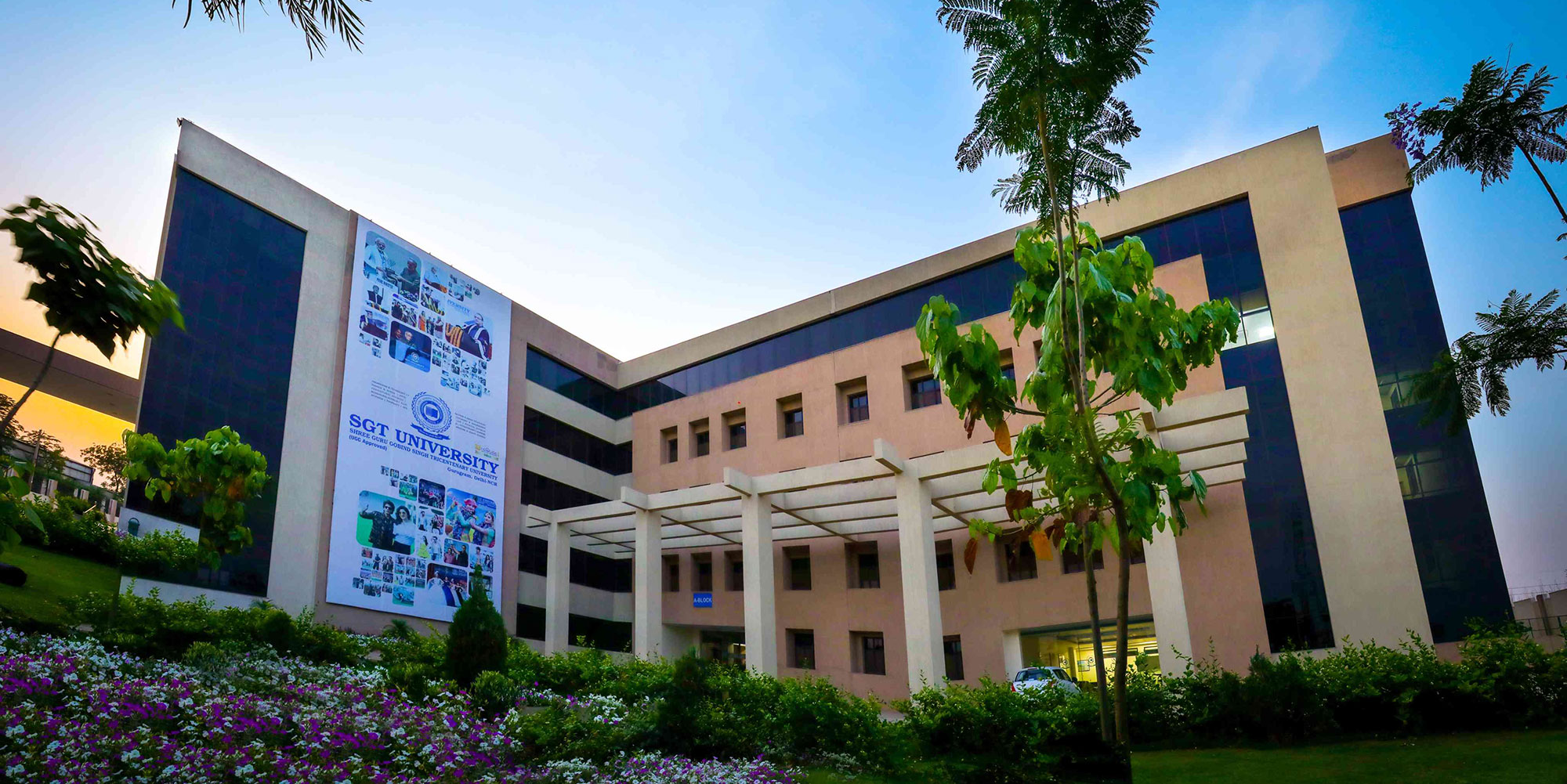
SGT University, situated in the serene land of Gurugram, Haryana has been accredited A+ grade by NAAC, securing its place among India’s rare universities to achieve such a splendid achievement and making it one of the best private universities in India.
The University has many facilities ranging from advanced diagnostic tools for its students to great learning experiences with experts. The advantages of SGT Hospital and Research Institute provide students hands-on practical learning in the field and working under practitioners.
Eligibility criteria for the course?
The eligibility criteria for a PhD in Medical Microbiology:
Master of Science in the concerned specialty with 55% marks.
Future research opportunities
A PhD in microbiology is not only concerned with the learning of the field but also with applying knowledge in a better way to solve real-life world problems. The enthusiastic researchers have countless opportunities to be a part of change and contribute to something unique in their lives. Some of the topics for microbiologist researchers includes:
- Preparation for pandemics: The researchers and scientists combine to fight the pandemics like Coronavirus.
- Development of AI in Microbiology: With the advancement of technology and AI in every field, more research needs to be conducted on how AI can be used better in medical microbiology.
- Vaccine Development: While dealing with the microbes that cause microbial infections, necessary prevention techniques and effective vaccines are needed to be developed.
- Tackling Antimicrobial Resistance: Drugs resistant infections also need to be carefully researched.
How to apply at SGT University?
To apply in SGT University, visit link: SGT University Admissions in 2025
Career paths after PhD in Medical Microbiology
A PhD in Medical Microbiology unlocks many career opportunities for the passionate researchers in fields like clinical & diagnostics, research & development, healthcare & public health, academia & education and more. They can pursue careers in:
- Clinical microbiologist
- Research assistant
- Junior Scientist
- Infection control officer
- Pathologist
- Lecturer
- Lab instructor
- Clinical Data Analyst
- Many other opportunities are also there after clearing government exams.
Conclusion
A PhD in Medical Microbiology isn’t only limited to bookish knowledge; it’s a commitment towards a future in the microscopic world of microorganisms where one must be full of curiosity and passion to get deeper into the subject and make a real-life impact. SGT University believes in the holistic development of its students; the students gain knowledge from the specialists, have access to state-of-the-art labs and equipment. The university fosters innovations and encourages interdisciplinary learning among students. It prepares students for a lifelong career in science and research.
FAQs
Q1. What is the duration of PhD in Medical Microbiology?
A PhD in Medical Microbiology is for 3 years; depending on the individual performance, it can be up to 6 years.
Q2. Is SGT really the best choice for PhD Medical Microbiology?
Yes, the reason is the experts and specialists at the university and the student-friendly environment. SGTians have the advantage of practical learning in SGT Hospital, where they get hands-on practice in the field.
Q3. What skills will I acquire during this course?
Culturing microbes, conducting research with proper methodologies, analyzing complex biological problems, supervising junior researchers, educating, computational analysis of data like genetic data, collaboration, and teamwork.
Q4. Which top companies provide placement after PhD in Medical Microbiology for SGT students?
Medanta, Park Hospital, Paras Healthcare, Fortis Memorial Research Institute. MAX Healthcare. Manipal Hospital, Cloudnine, CK Birla Hospital, SGT Medical College Hospital and Research Institute, and BLK Super Specialty Hospital.
Q5. How much will I be earning after this course in India?
The starting salary varies from 2.5 lakh to 12 lakh depending on the job profession, while the highest-paying job after PhD in medical microbiology has turned out to be that of a senior scientist or associate professor. Later the increment in salary is seen as per the individuals’ performance and experience.
Q6. What makes SGT the best fit for the program?
Strong industry connections, research excellence, practitioners’ guidance, hands-on learning, global opportunities, and holistic development are the areas that make SGT the best microbiology PhD college in India.
Q7. What kind of jobs can I get after completion of this course?
Biotechnologist, Microbiologist, Clinical Research Associate, Research Scientist, Entrepreneur (by launching your own centre for research and diagnosis), Epidemiologist, and related.
Q8. Can I get a government job after studying for a PhD in Medical Microbiology?
Yes, for a government job you’ll have to clear a related government exam as per your interest.
Q9. Is there direct admission?
Yes.
Q10. How to apply?
To apply for the PhD in microbiology programme, you can visit our admission website.
Q11. Does SGT University provide scholarships for PhD Medical Microbiology?
Yes, every student who meets the eligibility criteria for a scholarship gets the scholarship.