From Classroom to Cyber Frontlines: Training the Next Generation of Security Professionals
Updated on: September 30, 2026

Introduction
Every time a hospital gets locked out of its own patient records, every time a government database is compromised, every time a financial institution faces a ransomware demand — the same question echoes across boardrooms and policy chambers: Where are the people who can stop this?
The answer, more and more, must begin in universities. In classrooms equipped with cyber ranges and ethical hacking labs. In campuses where students aren't just learning to write code — they are learning to defend the digital world. Here is the story of how India's academic institutions, including SGT University, are rising to one of the defining challenges of the 21st century.
Table of Contents
- Introduction
- The Scope of the Crisis: A World in Need of Cyber Defenders
- Why Classrooms Have Become the First Line of Defence
- What Modern Cybersecurity Education Looks Like
- India's Academic Ecosystem: A Global Power on the Rise
- SGT University's Role in Shaping Tomorrow's Defenders
- The Global Context: Why India Must Lead
- What Students Must Bring to the Battlefield
- A Call to Action: Building India's Cyber Century
- FAQs
- Related Blogs
The Scope of the Crisis: A World in Need of Cyber Defenders
The figures are staggering. The ISC2 Cybersecurity Workforce Study put the global cybersecurity workforce at 5.5 million against a stated need of 10.2 million — meaning the profession would need to grow by roughly 87% to meet demand, leaving a gap of some 4.8 million unfilled roles. Notably, ISC2 paused publication of that gap estimate in its 2025 study, on the grounds that organisations now rank missing skills above missing headcount — a shift that makes the quality of cybersecurity education more important than ever, not less.
KEY STATISTIC
4.8 million+ cybersecurity professionals the world needs but does not yet have. (ISC2 Cybersecurity Workforce Study, 2024)
India sits at a particularly sharp intersection of this crisis. As the country races toward a $1 trillion digital economy by 2027–28 — powered by cloud computing, UPI-scale digital payments, AI adoption, and e-governance — its cybersecurity workforce has failed to keep pace. Industry data indicates that India requires one million cybersecurity professionals but currently musters only half that number.
The consequences are already visible. PwC's report on Indian infrastructure cyberattacks recorded a 15% rise in weekly cyberattacks over the years, including attacks on government agencies, critical systems and private enterprise across sectors. The digital revolution cannot outrun its own vulnerabilities — and vulnerabilities cannot be patched without people.
KEY STATISTIC
India's cybersecurity workforce demand is growing at 30% year-on-year — yet the talent supply continues to lag critically behind. (Industry workforce analysis, 2025)
Why Classrooms Have Become the First Line of Defence
For years, cybersecurity was treated as an on-the-job skill — something professionals picked up after careers in IT. That model is broken. The threat landscape evolves too fast, the attack surface is too broad, and the stakes are too high for reactive, informal training.
There is now a clear consensus among government officials, industry leaders and academic experts that the pipeline for cybersecurity talent must be built in a systematic way, from the ground up, in universities. Having a rigorous academic foundation is non-negotiable — not just tools and techniques, but law, ethics, policy, and critical thinking.
India's traditional IT programmes have historically emphasised software development and theoretical computing. But a new generation of universities is rewriting the curriculum. At institutions like SGT University, Gurugram — a NAAC A+ accredited university ranked among the top emerging institutions in the country — dedicated B.Tech specialisations in Cybersecurity are no longer an add-on. They are a mission.
What Modern Cybersecurity Education Looks Like
A well-structured cybersecurity programme at the university level is no longer just about firewalls and antivirus software. At SGT University, for instance, the B.Tech CSE in Cybersecurity curriculum is designed with four distinct dimensions:
- Technical Depth – Cryptography, network security, digital forensics, ethical hacking, and cloud security form the backbone.
- Legal & Ethical Grounding – Cyber laws, regulatory frameworks, and data privacy ethics are woven into every semester.
- Hands-On Practice – Industry collaborations, live projects, internships, and Capture-the-Flag (CTF) competitions translate theory into practice.
- Career Readiness – In addition to the degree, industry-recognised certifications such as CompTIA Network+, Security+, Cybersecurity Analyst, Penetration Testing, and Security for AI are encouraged and supported.
India's Academic Ecosystem: A Global Power on the Rise
The maturity of India's cybersecurity academic ecosystem is accelerating. From IITs to private universities in the NCR belt, institutions are investing in dedicated cybersecurity infrastructure, faculty expertise and research capability. IIT Bombay, for example, offers a prestigious M.Tech in Computer Science with a specialisation in Information Security.
India is also fast becoming a vibrant centre for community learning in cybersecurity, going beyond formal degrees. Nullcon — held annually in Goa — has grown into Asia's largest hacking and cybersecurity conference, drawing over 2,500 participants from more than 400 organisations. Its CTF competitions, live bug bounty programmes, and mentorship initiatives are shaping a generation of practitioners who are globally competitive.
INDIA ON THE GLOBAL STAGE
Experts at a special session convened by The Bengal Chamber of Commerce and Industry — addressed by researchers from Purdue University's CERIAS — concluded that India's strategic emphasis on in-house cybersecurity development and rapid workforce strengthening positions the country as a resilient player in the global security ecosystem.
SGT University's Role in Shaping Tomorrow's Defenders
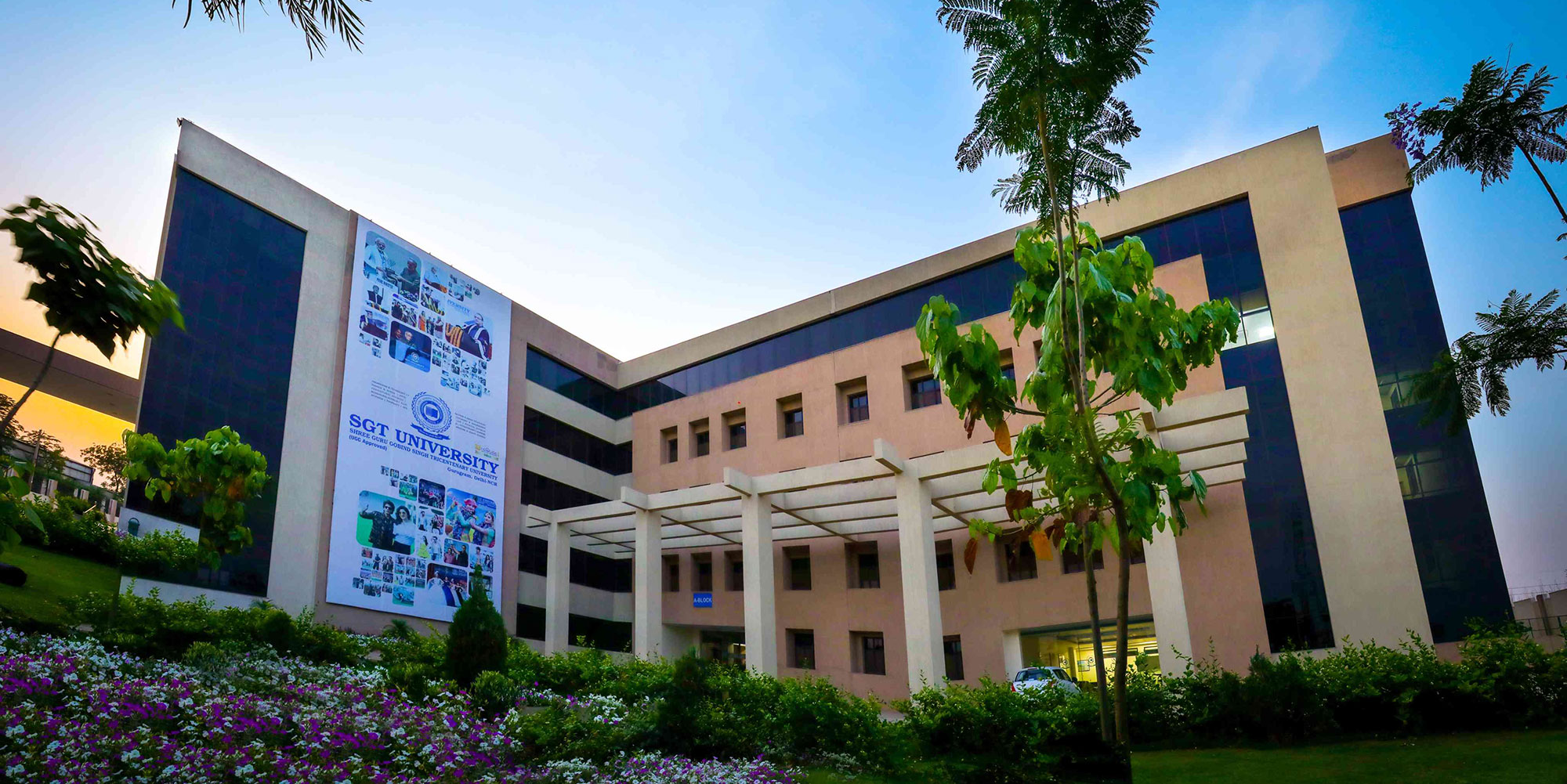
SGT University, established in 2013 and situated in the heart of the Delhi-NCR technology corridor, is uniquely positioned in this national mission. Gurugram — home to some of India's most prominent IT, fintech, and consulting firms — is both a talent market and a testing ground. Students graduating from SGT University's cybersecurity programmes enter a job market that is immediate, real, and unforgiving.
The university's B.Tech CSE in Cybersecurity programme prepares students across the full spectrum of competencies required in industry:
- Network Security & Cryptography – the foundations of secure communication.
- Ethical Hacking & Penetration Testing – simulating real-world attacks to identify vulnerabilities.
- Digital Forensics – investigating cybercrimes and recovering digital evidence.
- Cyber Laws & Compliance – navigating India's IT Act, DPDP Act, and international frameworks.
- Cloud & Infrastructure Security – securing modern enterprise environments.
Highest packages reach up to ₹20 LPA, with average packages ranging between ₹5.5 LPA and ₹10 LPA. SGT University graduates are in demand among top recruiters including TCS, Infosys, IBM, Wipro, Deloitte, Accenture and Microsoft, who visit campus for placements. Graduates are placed as cybersecurity analysts, ethical hackers, security consultants, and cloud security engineers, among other roles.
₹20 LPA+
Highest salary packages for cybersecurity graduates from Indian universities with strong certifications and practical exposure.
But placement statistics don't tell the whole story. SGT University's aim is not only to produce employable graduates, but critical thinkers who can anticipate threats, design resilient systems and lead security conversations at the national and global level.
Also Read: What is BTech in CS (Cyber Security)? Top Career Paths in India
The Global Context: Why India Must Lead
The cybersecurity talent crisis is a global emergency — but it is also a global opportunity. The Asia-Pacific region faces the largest regional workforce gap, at approximately 3.4 million professionals. India, with its enormous engineering talent pool, its young demographic profile, its English-language competency, and its deep roots in global IT services, is arguably the best-positioned country in the world to close this gap — not just for itself, but for the world.
Government initiatives like Digital India and Cyber Surakshit Bharat have accelerated institutional interest and private sector hiring. Regulatory frameworks — including the Digital Personal Data Protection (DPDP) Act — are creating compliance-driven demand for a new category of privacy and governance professionals. AI and cloud adoption are simultaneously expanding the attack surface and creating entirely new cybersecurity specialisations.
For Indian universities, this is a pivotal moment. The institutions that invest now — in laboratories, in faculty, in curriculum innovation, in industry partnerships — will define the shape of India's cybersecurity workforce for the next two decades.
What Students Must Bring to the Battlefield
A university can build the infrastructure. Industry can open the doors. But ultimately, every cybersecurity professional must bring something personal to the field — a mindset that is relentless, curious, and ethically anchored. The most effective cybersecurity practitioners share certain characteristics:
- Adversarial Thinking – the ability to see systems through the eyes of an attacker, anticipating failure modes before they are exploited.
- Lifelong Learning – the cybersecurity landscape evolves faster than any fixed curriculum; professionals who stop learning become obsolete within years.
- Ethical Discipline – access to sensitive systems and exploit knowledge is a responsibility, not a privilege.
- Communication Skills – translating technical risk into business language is as valuable as the technical skill itself.
- Collaboration – cyber threats are ecosystem-wide; no single defender works in isolation.
This is precisely why cybersecurity education at its best is never purely technical. It is interdisciplinary by necessity — drawing on law, psychology, geopolitics, economics, and ethics alongside networking, programming, and systems architecture.
A Call to Action: Building India's Cyber Century
The frontier of cybersecurity is not a distant battlefield. It is happening now — in hospital networks, in UPI transactions, in election infrastructure, in satellite systems, in the mobile phones of hundreds of millions of Indians. The people defending it are, right now, sitting in classrooms.
If India is to become the global cybersecurity powerhouse it has the potential to be, the work begins in universities. It begins with admissions counsellors pointing bright students toward cybersecurity as a career of consequence. It begins with faculty designing curricula that prepare students not just for today's threats but for threats that do not yet exist. It begins with industry leaders who see university partnerships as strategic investments, not charitable obligations.
And it begins with students who choose to step into a field that is among the most demanding — and most necessary — in the modern world.
SGT UNIVERSITY'S COMMITMENT
At SGT University, we believe cybersecurity education is a national responsibility. Our B.Tech CSE in Cybersecurity programme is designed to produce graduates who are technically rigorous, ethically grounded, and globally competitive — ready to serve India's digital future on the frontlines.
FAQs
Q1. How big is the global cybersecurity skills shortage?
The ISC2 Cybersecurity Workforce Study measured a global workforce of 5.5 million against a stated need of 10.2 million, leaving a gap of roughly 4.8 million professionals. The Asia-Pacific region accounts for the largest share at about 3.4 million.
Q2. What do you study in a B.Tech CSE in Cybersecurity?
Core areas include network security and cryptography, ethical hacking and penetration testing, digital forensics, cyber laws and compliance, and cloud and infrastructure security — supported by lab work, live projects, internships and Capture-the-Flag competitions.
Q3. Which certifications should a cybersecurity student pursue alongside the degree?
Industry-recognised certifications such as CompTIA Network+, Security+, Cybersecurity Analyst, penetration testing credentials, and emerging Security for AI certifications complement a degree and strengthen employability.
Q4. What jobs can you get after a cybersecurity degree in India?
Common roles include cybersecurity analyst, ethical hacker, security consultant, digital forensics investigator, and cloud security engineer, across IT services, fintech, consulting, and government sectors.
Q5. Do you need to be a coding expert to work in cybersecurity?
Programming matters, but cybersecurity is interdisciplinary by necessity. Adversarial thinking, ethical discipline, the ability to translate technical risk into business language, and a commitment to lifelong learning matter just as much as technical skill.
Related Blogs
- Best Private University for B.Tech in Cyber Security in Delhi NCR
- What is BTech in CS (Cyber Security)? Top Career Paths in India
- BTech in CSE After 12th: Courses, Jobs & Career Paths
- BTech CSE Admission: Fees, Syllabus, Entrance Exams & Career Scope
- Top College for BTech in Delhi NCR: Courses, Admissions, Fees
- B.Tech in Computer Science & Engineering at SGT University
Written By
Ms. Charvi
Department of Computer Science
School of Engineering and Technology
SGT University