Smart Water and Wastewater Management: Future of Sustainable Water Systems
Updated on: 22 May, 2026
Smart Water and Wastewater Management: Why It Matters and Where It's Headed
Water is life. But across the world, managing it well has become one of the biggest challenges of our time. Cities are growing fast, industries are expanding, and climate change is making rainfall unpredictable. All of this puts enormous pressure on our water systems, such as the pipes, treatment plants, and networks that bring clean water to our taps and carry waste away safely.
So, what's being done about it? The answer lies in something called smart water and wastewater management.
What Is Smart Water Management?
Smart Water and Wastewater Management has become a highly transformative and forward-looking field within Environmental Engineering. The challenges posed by rapid urbanisation, industrial growth, increasing population, and the escalating effects of climate change are putting significant stress on global water resources. In response, it is crucial to implement intelligent, sustainable, and technology-driven water management solutions to secure long-term water availability and promote environmental sustainability.
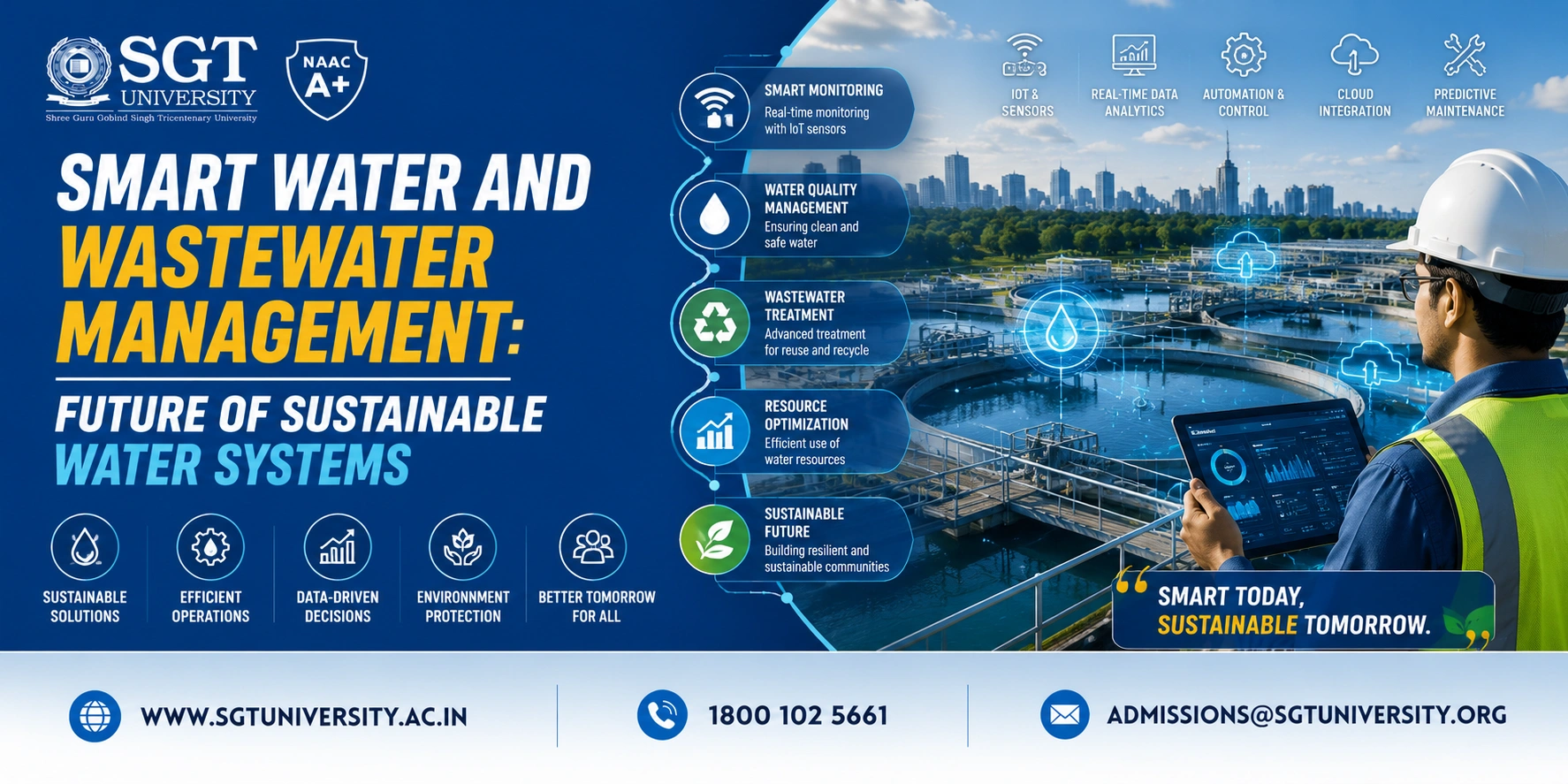
Modern smart water systems incorporate advanced technologies like Internet of Things (IoT), cloud computing, automation, real-time data analytics, and Artificial Intelligence (AI) to optimise water distribution, treatment, and monitoring. Smart sensors and digital monitoring devices continuously measure key water quality parameters, including pH, turbidity, dissolved oxygen, temperature, and contaminant levels. This type of monitoring helps water utility companies, municipalities, and industries:
- Detect leaks and pipe failures early
- Identify contamination risks before they affect consumers
- Reduce water loss and cut operating costs
- Make better decisions using real-time data
Wastewater: A Problem or a Resource?
Today, the way we think about wastewater is one of the most fascinating changes in environmental engineering. It is increasingly viewed as a resource rather than something to discard. Modern wastewater treatment uses advanced methods like:
- Membrane bioreactors – which filter wastewater at a microscopic level
- Biological nutrient removal – a natural process that removes harmful nutrients like nitrogen and phosphorus
- UV disinfection – which uses ultraviolet light to inactivate bacteria, viruses, and other microorganisms without chemical additives
- Advanced oxidation processes – powerful chemical reactions that break down stubborn pollutants
- Decentralised treatment systems – smaller, local treatment units that work closer to where wastewater is generated
Once treated, this water is not simply dumped into a river. It is recycled and reused for agricultural irrigation purposes, industrial operations, replenishing groundwater reserves, and watering public parks to reduce dust and keep the environment clean and green. This concept is known as the circular water economy, and it is gaining momentum globally.
Additionally, effective water management is essential for decreasing pollution, improving climate resilience, encouraging sustainable urban development, and safeguarding public health. To successfully address upcoming environmental concerns, governments, businesses, and research institutes worldwide are investing heavily in digital water infrastructure and cutting-edge smart wastewater treatment technology.
I can definitely say that, in the coming decades, smart water and wastewater management will continue to play a significant role in sustainable development. The field offers immense opportunities for research, innovation, entrepreneurship, and career growth within environmental engineering while helping societies build more resilient and resource-efficient water systems.
Written By:
Dr. Neeraj Saini
Assistant Professor