
Best Hotel Management Course to Become a Chef
Updated on: 10th February, 2025
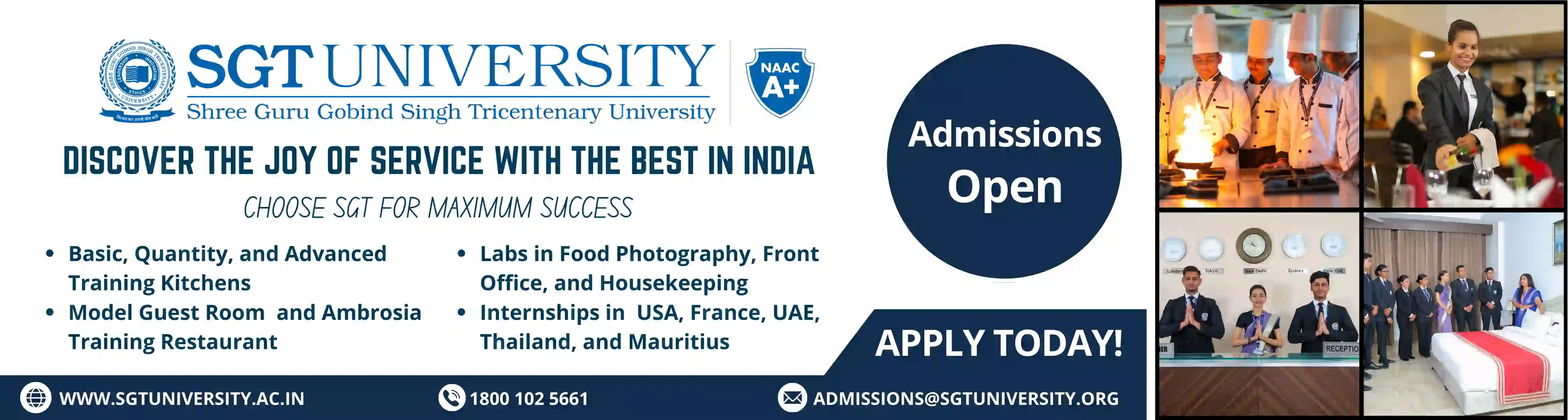
Are you passionate about culinary arts and dream of becoming a world-class chef? Do you find yourself glued to cooking shows, experimenting with flavours, and envisioning a career filled with gastronomic creations? If so, you're likely exploring the best path to turn your culinary dreams into reality. The journey to becoming a chef in India is exciting, and choosing the right Hotel Management Course is the first crucial step.
At SGT University (SGTU), recognised as one of the best Hotel Management Colleges in Gurgaon, we understand your passion and offer comprehensive programs designed to equip you with the skills, knowledge, and industry connections needed to thrive in the culinary world. This blog will guide you through everything you need to know about selecting the perfect Hotel Management Course to kickstart your career as a chef. From understanding the BHM Course and its eligibility criteria to exploring career opportunities and BHM course salary expectations, we've got you covered. Let's dive in and discover how SGT University can help you achieve your culinary aspirations!
Hotel Management Course: Your Gateway to Becoming a Chef
The culinary world is a vibrant and dynamic industry, offering exciting opportunities for those passionate about food. If you dream of becoming a chef, enrolling in the right Hotel Management Course is the first step. SGT University (SGTU), one of the top colleges for Bachelor of Hotel Management course in Gurgaon, provides a comprehensive program to help you achieve your culinary goals.
Hotel Management Course: Understanding the Bachelor of Hotel Management (BHM)
The Bachelor of Hotel Management course (BHM Course) is a comprehensive undergraduate program designed to equip students with the necessary skills and knowledge to excel in the hospitality industry. For aspiring chefs, the BHM course offers a strong foundation in culinary arts, management, and hospitality operations.
- BHM Full Form: Bachelor of Hotel Management
- BHM Course Full Form: Bachelor of Hotel Management Course
- BHM Course Duration: 4 years (8 semesters)
- BHM Course Eligibility: 10+2 education or equivalent, with a minimum of 50% marks.
- BHM Course Subjects: Food Production, Front Office Operations, Event Management, Hospitality Marketing, and Human Resource Management.
Detailed Table for BHM Course Overview
| Particulars | Details |
|---|---|
| Full Form | Bachelor of Hotel Management (Honours) |
| Course Level | Graduation (UG) |
| Duration | 4 years / 8 Semesters |
| Examination Type | Semester-based |
| Eligibility | 10+2 education or equivalent, with a minimum score of 50% marks |
| Admission Process | Merit-based |
| Fees | INR 1,75,000 (Per Annum) |
| Top Job Profiles | Front Office Manager, Hotel Manager, Event Manager, Food and Beverage Manager, Housekeeping Manager, Sales and Marketing Manager, Restaurant Manager, Catering Manager, Chef, Concierge, etc. |
| Top Job Recruiters | The Taj Group, ITC Hotels, Marriott International, The Leela, The Oberoi, Radisson, Hyatt Hotels, Courtyard by Marriott, Crowne Plaza Hotels & Resorts, The Ritz-Carlton, Lemon Tree Hotels, The Lalit, etc. |
| Key Subjects | Food Production, Front Office Operations, Event Management, Hospitality Marketing, and Human Resource Management |
| Internship Opportunities | India, USA, France, UAE, Thailand, and Mauritius |
| Career Opportunities | Hotel Manager, Event Manager, Food & Beverage Manager, Hospitality Consultant in India and abroad |
| Recognition | One of the best hotel management colleges in Gurgaon |
| Application Limit | Students can only apply to one Hotel Management Course at a time |
| Application Fee | Yes, an application fee is required |
| SGTU Advantage | Quality education and strong industry connections |
Hotel Management Course: Why SGT University Stands Out
SGT University is renowned as one of the best hotel management colleges in Gurgaon, Haryana, and Delhi NCR. Here's why:
- Industry-Relevant Curriculum: Courses are designed based on extensive research, focusing on the skills essential for success in the hospitality sector.
- State-of-the-Art Facilities: Modern infrastructure including specialized labs for front office operations, food production, and housekeeping.
- Experienced Faculty: Expert instructors with extensive industry experience.
- International Exposure: Access to paid international internships and collaborations with leading hotel chains.
- Strong Industry Connections: Robust ties with various hospitality organizations, facilitating networking and job placements.
Detailed Table Comparing SGTU with Other Hotel Management Colleges
| Feature | SGT University (SGTU) | Other Hotel Management Colleges (Generic) |
|---|---|---|
| Curriculum Relevance | Courses designed based on extensive industry research, focusing on people and service-oriented operations | May have a more theoretical approach, with less emphasis on current industry needs. |
| Facilities | State-of-the-art infrastructure, including specialized labs for front office operations, food production, and housekeeping | Facilities may vary; some colleges might lack specialized labs. |
| Faculty Experience | Experienced instructors with extensive industry experience. | Faculty experience can vary, with some instructors having limited practical experience. |
| International Exposure | Access to paid international internships and collaborations with leading hotel chains. | Limited or no international internship opportunities. |
| Industry Connections | Robust ties with various hospitality organizations, facilitating networking opportunities and job placements. | Fewer industry connections, potentially limiting job placement opportunities. |
| Experiential Learning | Hands-on practice through industrial visits, events, and workshops that simulate real-world scenarios in hospitality management. | Fewer opportunities for hands-on experience and real-world simulations. |
| Recognition | Recognized as one of the top hotel management colleges in Gurgaon. | Recognition may vary. |
| Focus on Culinary Arts | Strong emphasis on culinary arts and gastronomy, preparing students for diverse food and beverage management roles. | The emphasis on culinary arts might be less pronounced. |
| Practical Training | Integrates practical training through laboratory exercises, visits to technical fairs, expositions, summits, and industrial exposure via hotel visits. | May have fewer practical training opportunities outside of the classroom. |
| Language Studies | Special emphasis on language skills, especially French, for the hospitality industry. | Limited or no focus on foreign language skills. |
| Career Support | Comprehensive career support services, including placement assistance and an alumni network. | Career support services may be limited. |
| Alumni Success Stories | Numerous success stories of alumni who have excelled in the culinary field. | May have fewer documented success stories or a less developed alumni network. |
| Teaching Strategies | Follows UGC guidelines for Hospitality & Tourism Education. | May not strictly adhere to UGC guidelines or have a less structured approach. |
| Dual Credential Structure | Students can earn both a Bachelor's degree and a Diploma in Hotel Management. | May not offer dual credential options. |
Hotel Management Course: The SGTU BHM Course -- A Chef's Paradise
The SGTU BHM Course is meticulously designed to provide aspiring chefs with a robust foundation in culinary arts and hotel management. The curriculum includes:
- Food Production: In-depth study of culinary techniques, food safety, and menu planning.
- Front Office Operations: Understanding guest services and hotel management.
- Event Management: Learning to plan and execute successful culinary events.
- Hospitality Marketing: Developing strategies to promote culinary offerings.
- Human Resource Management: Managing kitchen staff and fostering teamwork.
Detailed Table for BHM Course Subjects
| Subject Area | Specific Topics Covered |
|---|---|
| Food Production | Culinary techniques, food safety, menu planning, kitchen management, ingredient sourcing, and culinary innovation. |
| Front Office Operations | Guest services, reservations, registration, check-in/check-out procedures, handling guest inquiries, and managing front desk operations. |
| Event Management | Planning and executing events, event marketing, budgeting, vendor management, logistics, and catering services. |
| Hospitality Marketing | Marketing strategies, branding, advertising, public relations, digital marketing, social media marketing, and customer relationship management. |
| Human Resource Management | Staff recruitment, training, performance management, employee relations, compensation, benefits, labor laws, and team building. |
| Food & Beverage Management | Menu planning, beverage management, food service procedures, sales control systems, tobacco knowledge, and special food services. |
| Strategic Management | Leadership, decision-making, strategic planning, and problem-solving in the hospitality sector. |
| Financial Management | Financial analysis, budgeting, cost control, revenue management, and investment strategies. |
| Ethical Management Practices | Ethical considerations in hospitality operations, corporate social responsibility, and sustainable practices. |
| Housekeeping Management | Cleaning procedures, room maintenance, inventory management, and hygiene standards. |
| Accommodation Operations | Reservations, guest check-in process, hotel housekeeping, and types of beds and mattresses. |
| Meals & Menu Planning | Meal planning, menu design, and nutritional considerations. |
How to Start Your Career as a Chef: A Comprehensive Guide
Becoming a chef requires passion, dedication, and the right education. Here's a step-by-step guide:
- Enroll in a BHM Course: A formal education provides a structured learning environment and industry-recognized credentials.
- Gain Practical Experience: Internships and training opportunities allow you to apply your knowledge in real-world settings.
- Develop Essential Skills: Creativity, precision, time management, and leadership are crucial for success.
- Specialize in a Cuisine: Focus on a specific culinary style to develop expertise and stand out.
- Network with Professionals: Attend culinary events, join professional organizations, and connect with chefs to expand your network.
Detailed Table for Steps to Becoming a Chef
| Step | Description |
|---|---|
| Formal Education | Enroll in a Bachelor of Hotel Management (BHM) course at a reputable institution like SGT University. |
| Practical Experience | Gain hands-on experience through internships and training opportunities in hotels, restaurants, or catering companies. |
| Develop Skills | Cultivate essential culinary skills such as knife skills, cooking techniques, flavor pairing, and presentation. |
| Specialize in Cuisine | Focus on a specific culinary style, such as French, Italian, Indian, or pastry, to develop expertise. |
| Learn Management Skills | Develop leadership, communication, and time-management skills to manage kitchen staff and operations efficiently. |
| Network | Attend culinary events, join professional organizations, and connect with chefs to expand your network and stay updated on industry trends. |
| Seek Mentorship | Find a mentor who can provide guidance, support, and career advice. |
| Continuous Learning | Stay updated on culinary trends, techniques, and technologies through continuous learning and professional development. |
| Create a Portfolio | Document your culinary creations, achievements, and experiences in a portfolio to showcase your skills to potential employers. |
| Obtain Certifications | Pursue culinary certifications to validate your skills and knowledge. |
| Start as Entry-Level | Begin your career as a commis chef or line cook to gain experience and learn from senior chefs. |
| Advance Your Career | Progress through the ranks, from chef de partie to sous chef and eventually executive chef, by demonstrating your skills and leadership abilities. |
Hotel Management Course: Career Opportunities Await
A Hotel Management Course opens doors to various career paths. As a chef, you can explore roles such as:
- Chef: Overseeing kitchen operations and creating menus.
- Sous Chef: Assisting the head chef and managing daily tasks.
- Pastry Chef: Specializing in desserts and baked goods.
- Executive Chef: Managing multiple kitchens and culinary teams.
Opportunities are available in hotels, restaurants, resorts, catering companies, and even entrepreneurial ventures like opening your own restaurant.
Detailed Table for Career Opportunities After BHM
| Career Path | Description |
|---|---|
| Chef | Oversees all aspects of kitchen operations, including menu planning, food preparation, and staff management. |
| Sous Chef | Assists the head chef in managing daily kitchen tasks, supervising staff, and ensuring food quality and consistency. |
| Pastry Chef | Specializes in creating desserts, pastries, and baked goods, often requiring expertise in baking techniques and artistic presentation. |
| Executive Chef | Manages multiple kitchens and culinary teams, sets culinary standards, and oversees menu development and cost control. |
| Catering Manager | Plans and manages catering services for events, including menu selection, food preparation, and service logistics. |
| Restaurant Manager | Oversees all aspects of restaurant operations, including customer service, staff management, and financial performance. |
| Food and Beverage Manager | Manages food and beverage operations in hotels or resorts, including menu planning, inventory control, and staff training. |
| Event Manager | Plans and executes culinary events, including menu design, food preparation, and service logistics. |
| Hotel Manager | Manages all aspects of hotel operations, including food and beverage services, guest services, and staff management. |
| Hospitality Consultant | Provides expert advice and guidance to hospitality businesses on various aspects of operations, including menu design, service standards, and staff training. |
| Entrepreneur | Opens their own restaurant, café, bakery, or catering business, utilizing their culinary skills and business knowledge. |
| Culinary Instructor | Teaches culinary arts at vocational schools, colleges, or universities, sharing their knowledge and expertise with aspiring chefs. |
| Food Stylist | Creates visually appealing food presentations for advertisements, magazines, and cookbooks. |
| Personal Chef | Provides customized culinary services to private clients, including meal planning, grocery shopping, and food preparation. |
Hotel Management Course: Understanding BHM Course Fees and Planning Your Finances
The BHM course fees at SGTU are INR 1,75,000 per annum. While investing in your education, explore financial aid and scholarship opportunities to ease the financial burden. Remember, a BHM degree is an investment in your future, offering long-term career prospects and earning potential.
Detailed Table for BHM Course Fees and Financial Planning
| Aspect | Details |
|---|---|
| Annual BHM Course Fees | INR 1,75,000 (Per Annum) at SGT University. |
| Total Course Fees | INR 7,00,000 (Approximate for the entire 4-year program) |
| Financial Aid Options | Scholarships, education loans, and installment payment plans. |
| Scholarship Opportunities | Merit-based scholarships for academically excellent students. |
| Education Loans | Tie-ups with leading banks to provide education loans at competitive interest rates. |
| Installment Plans | Flexible installment payment options to ease the financial burden. |
| Additional Expenses | Accommodation, books, uniforms, and other miscellaneous expenses. |
| Cost of Living | Varies depending on lifestyle and accommodation preferences. |
| Return on Investment (ROI) | High potential for career growth and earning potential in the hospitality industry. |
| Career Progression | Opportunities for promotions and salary increments with experience and expertise. |
| Long-Term Benefits | Enhanced career prospects, job security, and personal growth. |
| Industry Growth | The hospitality industry is on the upswing, with a dire need for qualified personnel. |
| Salary Expectations | The salary for graduates can be reasonably well paid, but it varies based on position, experience, and location. |
Hotel Management Course: A Day in the Life of a Chef
The life of a chef is demanding but rewarding. Expect long hours, high pressure, and a fast-paced environment. Essential qualities include:
- Passion: A genuine love for food and cooking.
- Resilience: Ability to handle stress and bounce back from challenges.
- Teamwork: Collaborating with kitchen staff to deliver exceptional culinary experiences.
Detailed Table for Daily Life of a Chef
| Aspect | Description |
|---|---|
| Work Hours | Long and irregular hours, including evenings, weekends, and holidays. |
| Work Environment | Fast-paced and high-pressure kitchen environment. |
| Responsibilities | Menu planning, food preparation, cooking, plating, and supervising kitchen staff. |
| Skills Required | Culinary skills, knife skills, time management, leadership, and creativity. |
| Challenges | Maintaining consistency in food quality, managing kitchen staff, and meeting customer expectations. |
| Rewards | Creative expression through food, customer satisfaction, and career growth. |
| Typical Day | Arriving early to prepare ingredients, supervising kitchen staff during service, and cleaning up after service. |
| Stress Levels | High due to demanding workload and pressure to deliver exceptional culinary experiences. |
| Teamwork | Collaborating with kitchen staff to ensure smooth kitchen operations. |
| Customer Interaction | Limited direct interaction with customers but indirectly through food quality and presentation. |
| Continuous Learning | Staying updated on culinary trends, techniques, and technologies. |
| Health Considerations | Maintaining physical stamina and avoiding injuries in the kitchen. |
| Balancing Creativity | Balancing creative culinary expression with efficiency and management requirements. |
| Work-Life Balance | Challenging due to long and irregular work hours. |
Hotel Management Course: The Booming Culinary Scene in India
India's culinary scene is experiencing unprecedented growth. The demand for skilled chefs is rising across various sectors, including hotels, restaurants, resorts, and catering services. Leveraging your Hotel Management Course from SGTU will position you for success in this dynamic market.
Detailed Table for Culinary Scene in India
| Trend | Description |
|---|---|
| Market Growth | The hospitality industry in India is predicted to contribute over ₹7.6 trillion to the nation's economy by the end of 2025. |
| Job Creation | The Indian hospitality market is predicted to generate over 1 million jobs by 2025. |
| Annual Growth Rate | The sector is growing at a CAGR of 10.5%. |
| Demand for Chefs | Rising demand for skilled chefs across various sectors, including hotels, restaurants, resorts, and catering services. |
| Culinary Innovation | Increasing focus on culinary innovation, fusion cuisine, and unique dining experiences. |
| Gastronomy Tourism | Growing popularity of gastronomy tourism, with travelers seeking authentic culinary experiences. |
| Sustainability | Increasing emphasis on sustainable practices, including local sourcing and waste reduction. |
| Digitalization | The rise of online food delivery services and digital marketing strategies for restaurants and culinary businesses. |
| Government Initiatives | Government initiatives to promote tourism and hospitality, including infrastructure development and skill development programs. |
| Changing Consumer Preferences | Growing consumer interest in healthy eating, organic food, and personalized dining experiences. |
Admission Process at SGTU
Ready to embark on your culinary journey? Here's how to apply for the BHM course at SGTU:
- Visit the SGTU Website: Find the BHM course page for detailed information.
- Check Eligibility: Ensure you meet the 10+2 qualification with a minimum of 50% marks.
- Fill Out the Application Form: Complete the online application form with accurate details.
- Pay the Application Fee: Submit the required application fee.
- Submit Required Documents: Provide necessary documents such as mark sheets and identity proof.
- Await Merit List: Admission is based on merit.
- Enroll: Once selected, complete the enrollment process.
Detailed Table for Admission Process at SGTU
| Step | Description |
|---|---|
| Visit the SGTU Website | Navigate to the official SGT University website and find the BHM course page for detailed information about the program. |
| Check Eligibility | Ensure that you meet the eligibility criteria for the BHM course, including the 10+2 qualification with a minimum of 50% marks. |
| Fill Out the Application Form | Complete the online application form with accurate personal and academic details. |
| Pay the Application Fee | Submit the required application fee through the online payment gateway. |
| Submit Required Documents | Provide necessary documents, such as mark sheets, identity proof, and passport-sized photographs. |
| Await Merit List | Admission is based on merit, and the university will release a merit list of selected candidates. |
| Counseling Session | Attend the counseling session for document verification and seat allotment. |
| Enrollment | Once selected, complete the enrollment process by paying the course fees and submitting the required documents. |
| Orientation Program | Attend the orientation program to familiarize yourself with the university, faculty, and course curriculum. |
Hotel Management Course: Your Culinary Journey Begins Here!
Choosing the right Hotel Management Course is the first step toward becoming a chef. SGT University, a top college for Bachelor of Hotel Management course in Gurgaon, offers the perfect blend of academic rigor, practical training, and industry connections to set you on the path to success. Enroll now and turn your culinary dreams into reality!
Top Key Takeaways: Hotel Management Course
- Hotel Management Course at SGTU: SGT University (SGTU) is a top choice among Best Hotel Management Colleges in Gurgaon for aspiring chefs, offering comprehensive programs.
- BHM Course Overview: The Bachelor of Hotel Management course (BHM Course) is a 4-year undergraduate program covering hospitality industry fields. The BHM Course Full Form is Bachelor of Hotel Management.
- BHM Course Eligibility: Requires 10+2 education (or equivalent) with a minimum of 50% marks.
- BHM Course Subjects: Key subjects include Food Production, Front Office Operations, Event Management, Hospitality Marketing, and Human Resource Management.
- BHM Course Duration: The BHM Course year spans four years, providing in-depth knowledge and skills.
- How to Become a Chef: A formal Hotel Management Course and practical experience are crucial steps in becoming a chef in India.
- SGTU Advantage: SGT University's curriculum is industry-relevant, with state-of-the-art facilities, experienced faculty, and strong industry connections.
- International Opportunities: SGTU provides access to paid international internships in locations like the USA, France, UAE, Thailand, and Mauritius.
- Career Prospects: Graduates can pursue roles such as Hotel Manager, Event Manager, and Food & Beverage Manager in India and abroad.
- BHM Course Fees: The annual BHM course fees at SGTU are INR 1,75,000, with financial aid and scholarship opportunities available.
- Alumni Success: SGTU boasts numerous alumni who have excelled in the culinary field, demonstrating the program's effectiveness.
- How to Start Your Career as a Chef: Networking and continuous learning are essential for career advancement after completing a Hotel Management Course.
- Industry Growth: The Indian hospitality market is projected to create over 1 million jobs by 2025, growing at a CAGR of 10.5%.
- Admission Process: Admission to SGTU's Hotel Management Course is merit-based, with an application fee. Students can only apply for one Hotel Management Course at a time.
- SGTU's Mission: SGT University's School of Hotel & Tourism Management focuses on people and service-oriented operations. SGTU equips students with tools for the hospitality industry. Experiential learning via events and industrial visits are available.
- Changing perceptions: Students' perceptions of the Hotel Management Course may evolve due to job opportunities and entrepreneurial plans.
- O2O Teaching Mode: Integration of virtual and real elements.
- Industrial Training: Enhances practical skills and professional competence.
- Awakening to Languages: The Awakening to Languages (ATL) approach has seen positive outcomes in foreign language classes.