
The Future of Higher Education: Balancing Technology with Human Empathy
Updated on: November 11, 2026
Introduction
Universities are investing heavily in artificial intelligence, simulation labs and digital platforms. At the same time, students say they want something technology cannot give them on its own: a teacher who knows their name, notices when they are struggling and helps them grow. The real question for the future of higher education is not technology or people, but how to make each strengthen the other.
Quick answer: The future of higher education lies in balancing technology with human empathy. Digital tools such as AI, early alert systems and simulation labs work best when they free teachers to spend more time mentoring, help spot students who need support and let learners practise safely before working with real people. Universities that pair these tools with strong mentorship, wellbeing services, community outreach and clear data-privacy rules are better placed to produce graduates who are both technically skilled and socially responsible.
This article explains how that balance works in practice, what the evidence shows, and what students should look for when they choose a university in 2026 and beyond.
Table of Contents
- Technology-First vs Human-First: At a Glance
- Can a University Be Both Technology-First and Human-First?
- How Does Technology Strengthen Human Mentorship?
- How Do Multidisciplinary Campuses Bridge Technology and Empathy?
- Why Student Wellbeing Belongs at the Centre
- Why Real-World Community Impact Is the Ultimate Test
- Protecting Student Data on a Digital Campus
- What Should Tomorrow's Learners Look For?
- Key Takeaways
- FAQs
- Sources
Technology-First vs Human-First: At a Glance
| Approach | What it focuses on | Typical tools and practices | Risk if used alone |
|---|---|---|---|
| Technology-first | Efficiency, personalisation and new skills | AI tools, simulation labs, learning platforms, data analytics | Students can become data points rather than people |
| Human-first | Wellbeing, mentorship, ethics and community | Faculty mentoring, counselling, small groups, outreach | Graduates may miss the digital skills employers expect |
| Balanced | Technology that serves human goals | Early alerts that prompt a conversation, simulation before real patients, AI with clear ethical rules | Needs investment in both tools and people |
Can a University Be Both Technology-First and Human-First?
A technology-first model is built around tools such as artificial intelligence, simulation labs and unified digital platforms. A human-first model puts student wellbeing, faculty mentorship, ethics and community outreach at the centre.
The two are not opposites. UNESCO's guidance on generative AI in education, published in September 2023, calls for a "human-centred vision" of new technologies that protects human agency, inclusion and equity. In practice, that means asking a simple question of every new tool: does it help a student learn, or does it only make a process faster?
Our earlier look at the impact of ChatGPT in university classrooms explores how students and teachers are already using AI day to day.
How Does Technology Strengthen Human Mentorship?
When software takes over routine tasks such as grading logistics and timetable tracking, teachers can spend more time on academic guidance, pastoral care and one-to-one conversations. Digital tools can strengthen human connection in three main ways:
- Early alert systems flag students who may be struggling, so that an adviser can step in early.
- Virtual advising platforms make it easier for students to get guidance between face-to-face meetings.
- Learning analytics highlight individual strengths and gaps, helping teachers tailor support.
What the evidence shows
Georgia State University in the United States offers one of the best-documented examples. Its advising system tracks more than 700 risk factors, such as a poor grade in a course a student needs for their major, and is updated daily. An alert never triggers a penalty; it prompts a conversation between the student and an adviser. In one year, the system led to 51,000 in-person adviser meetings, three to four times the earlier level. Graduation rates rose by 6 percentage points, and low-income, first-generation and minority students closed the graduation gap.
The lesson is that technology did not replace advisers. It told them where to look, and the human conversation did the rest.
How Do Multidisciplinary Campuses Bridge Technology and Empathy?
Multidisciplinary universities can link technology to real human needs by bringing health, law, engineering, agriculture and the social sciences onto one campus. A computer science student who works with doctors, or a law student who studies data privacy, learns why technology must answer to people.
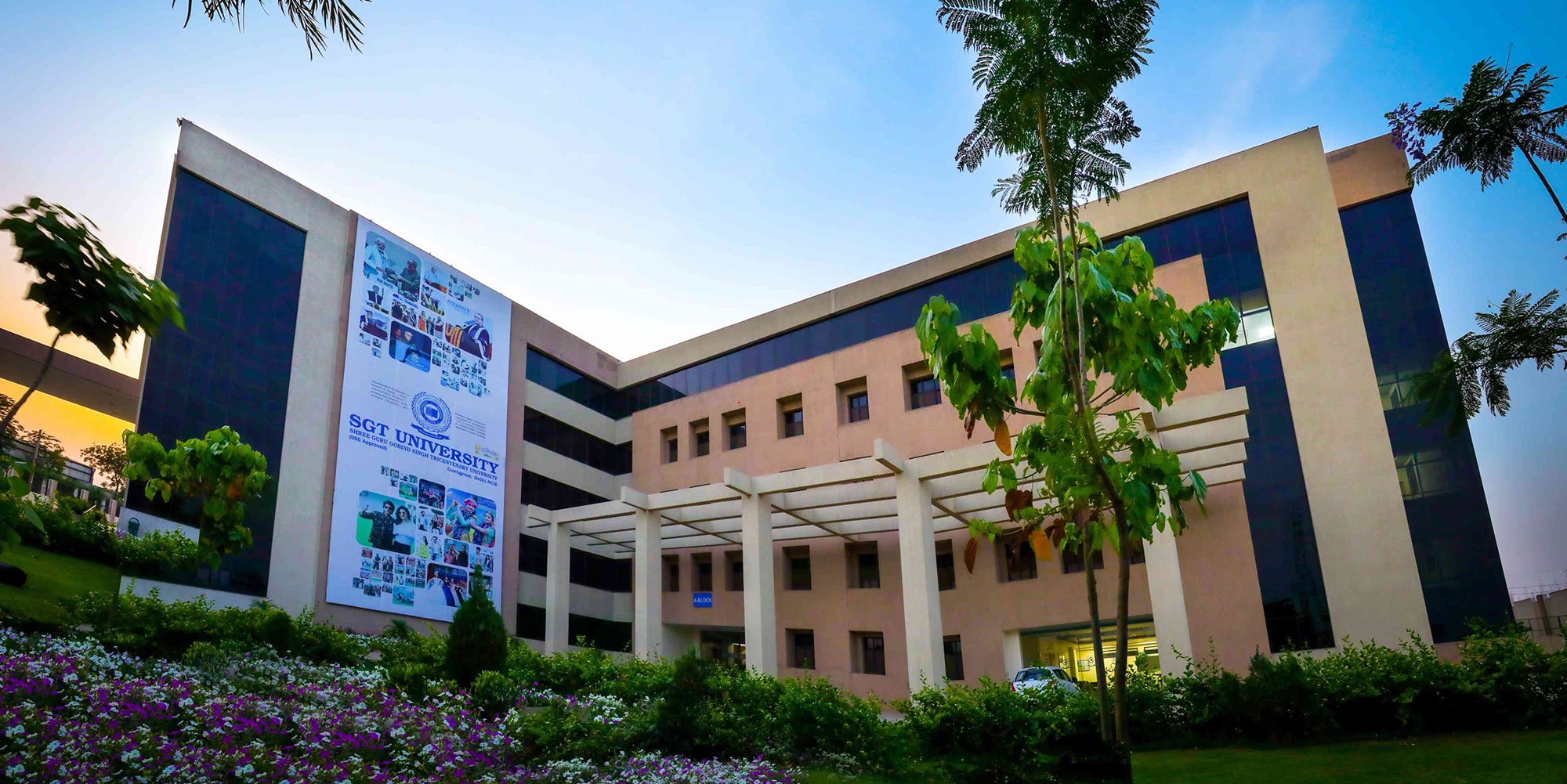
SGT University, Gurugram, is one example of this model. Founded in 2013 and accredited A+ by NAAC, it has 19 faculties and more than 200 programmes. Some of the ways it connects technology with human care:
| Initiative | What it does | How it links technology and empathy |
|---|---|---|
| National Reference Simulation Centre (NRSC) | A 14,000 sq ft centre with high-fidelity manikins and simulated ICU, trauma, birthing and operation theatre areas, used by nursing and medical students | Students practise clinical skills without risk to real patients |
| Medical Cobotics Centre | Set up with the I-Hub Foundation for Cobotics (IHFC), IIT Delhi's Technology Innovation Hub, for research in robotic surgery, assistive care and AI-powered diagnostics | Engineers, clinicians and students design technology around patient needs |
| Teaching hospital | A multispecialty teaching hospital with more than 800 beds | Students learn by caring for real patients under supervision |
| C.A.L.M Spaces | A wellbeing unit offering one-to-one counselling, support groups and a peer-listener programme | Puts student mental health alongside academic life |
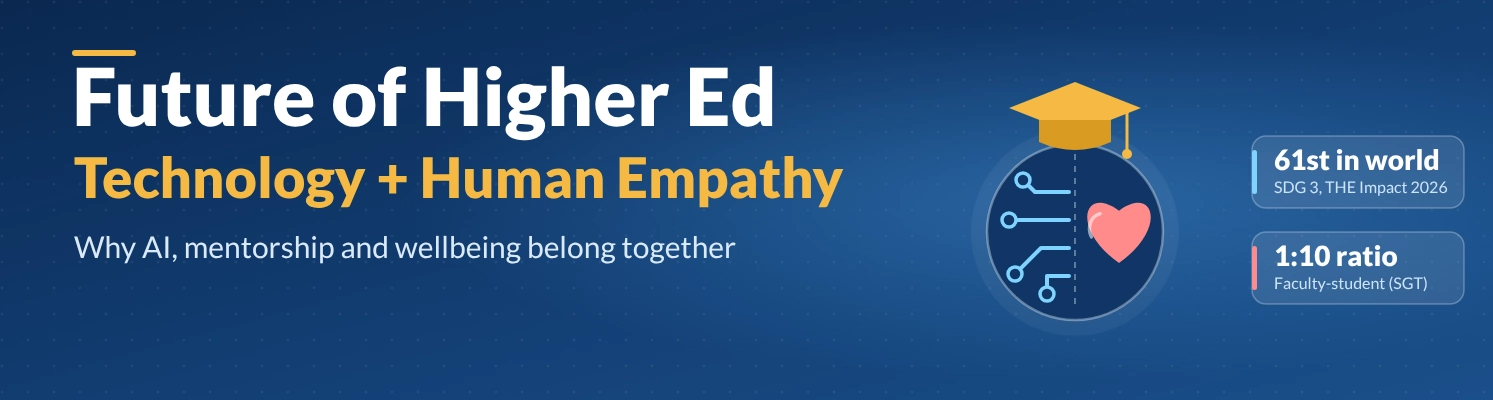
SGT University's website also lists a faculty-to-student ratio of 1:10, which supports the kind of close mentorship described above. Students interested in this blend can explore programmes such as the MBBS, the B.Tech in Artificial Intelligence and the BA (Hons.) Applied Psychology.
Why Student Wellbeing Belongs at the Centre
A human-first university takes mental health as seriously as marks. In India, this is now a legal expectation as well as a good practice. On 25 July 2025, the Supreme Court issued guidelines for all educational institutions:
- Adopt and publish a mental health policy, reviewed every year.
- Appoint a trained counsellor, psychologist or social worker if the institution has more than 100 students.
- Train teaching and non-teaching staff twice a year in psychological first aid and spotting warning signs.
- Display suicide-prevention helplines, such as Tele-MANAS, in hostels, classrooms and on websites.
At SGT University, the Student Welfare Centre runs a confidential counselling cell, and C.A.L.M Spaces trains students as certified peer listeners. Read more about how SGT tackles mental health stigma.
Why Real-World Community Impact Is the Ultimate Test
Community impact is one of the clearest ways to judge whether digital tools create meaningful change. Regional outreach, accessible learning and realistic healthcare simulation all help students apply technology to urgent local needs.
International rankings now measure this too. The Times Higher Education Impact Rankings assess universities against the UN Sustainable Development Goals. In the 2026 edition, SGT University was placed 61st in the world for SDG 3 (Good Health and Well-being) and 98th for SDG 2 (Zero Hunger), with an overall band of 601 to 800. Outreach also happens at ground level: the Faculty of Naturopathy and Yogic Sciences, for example, has run free health check-up camps in nearby villages such as Farukhnagar, near Budhera.
See the full THE Impact Rankings 2026 results for details.
Protecting Student Data on a Digital Campus
A digital campus collects a lot of personal data, from attendance and grades to health and wellbeing records. Using that data to help students is only fair if it is protected. India's Digital Personal Data Protection Rules, notified in November 2025, set an 18-month phased timeline for organisations to comply. Among other things, they require:
- Clear, standalone consent notices that state why data is being collected.
- Prompt, plain-language notice to affected people after a data breach.
- Verifiable consent before processing children's data, with limited exemptions for purposes such as education and healthcare.
When you visit a university, it is fair to ask how it uses student data and who can see it.
What Should Tomorrow's Learners Look For?
Universities that keep technology separate from ethics risk producing graduates who are less prepared for complex social challenges. Use these questions on a campus visit or an open day:
| What to check | Questions to ask |
|---|---|
| Technology with a purpose | Are digital tools used to solve real human problems, or only to deliver content online? |
| Mentorship | Will I have an assigned mentor? What is the faculty-to-student ratio? |
| Hands-on practice | Are there simulation labs, clinics or field projects where I can practise safely? |
| Wellbeing | Is there a counsellor on campus, and how do I book a session? |
| Community outreach | Does the university's research or outreach address local health and social needs? |
| Data privacy | How is my personal data used, and who can see it? |
Choosing a course as well as a university? Our guide to future-proof courses in the AI era and our look at private universities known for their faculty can help.
Key Takeaways
- The future of higher education depends on making technology and human care work together.
- Technology works best when it frees teachers for mentoring and prompts timely human conversations.
- Evidence from early alert systems shows that data plus advising can raise graduation rates.
- Multidisciplinary campuses connect technical skills to real needs in health, law and agriculture.
- Student wellbeing and data privacy are now legal expectations in India, not optional extras.
- When choosing a university, check mentorship, hands-on practice, wellbeing support and community impact.
FAQs
Q1. What is the future of higher education?
The future of higher education is likely to combine digital tools such as AI,
simulation and data analytics with strong human mentorship, student wellbeing support
and real-world community work. Technology handles routine tasks and personalises
learning, while teachers guide judgement, ethics and personal growth.
Q2. Can a university truly balance technology and human-centred learning?
Yes. Digital tools work best as enablers: they flag students who need help, free up
teacher time and let students practise safely in simulations. The balance comes from
pairing these tools with mentorship, so that technology supports empathy and ethical
decision-making rather than replacing them.
Q3. Why is human-first mentorship essential in tech-driven education?
Technical skills alone cannot solve social problems. Mentorship provides the ethical
grounding, critical thinking and social awareness needed to apply technology
responsibly, and faculty guidance helps students see how digital tools affect real
people.
Q4. Will AI replace university teachers?
Not on the evidence so far. UNESCO's guidance on generative AI in education calls for
a human-centred approach that protects human agency. AI can take on routine work, but
teaching, mentoring and judging what is right for a student remain human tasks.
Q5. How do early alert systems help students?
Early alert systems track signals such as poor grades in key courses and alert an
adviser, who then talks to the student. At Georgia State University in the United
States, a system tracking more than 700 risk factors led to 51,000 adviser meetings in
a year, and graduation rates rose by 6 percentage points.
Q6. How do multidisciplinary universities apply technology to human needs?
They bring technology into human-centred fields such as healthcare, agriculture and
law. Examples include simulation labs where health students practise on manikins
before treating patients, and medical robotics centres where engineers and doctors
design tools together.
Q7. What mental health support must colleges in India provide?
Under Supreme Court guidelines issued on 25 July 2025, educational institutions must
adopt a mental health policy, appoint a trained counsellor if they have more than 100
students, train staff twice a year and display suicide-prevention helplines such as
Tele-MANAS.
Q8. How is student data protected on digital campuses in India?
The Digital Personal Data Protection Rules, notified in November 2025, require clear
consent notices, prompt breach notifications and verifiable consent for children's
data, with an 18-month phased timeline for compliance.
Q9. What should students look for in a future-ready university?
Look for digital infrastructure alongside a good student-to-faculty ratio, simulation
labs together with real community outreach, visible mental health support and a clear
policy on student data.
Q10. How does SGT University combine technology and human care?
SGT University runs the National Reference Simulation Centre for health students, a
Medical Cobotics Centre with IIT Delhi's I-Hub Foundation for Cobotics, a teaching
hospital with more than 800 beds and C.A.L.M Spaces, a wellbeing unit for students.
Its website lists a faculty-to-student ratio of 1:10.
Sources
The facts and figures in this article come from the sources below.
- UNESCO (via IRCAI), Guidance for generative AI in education and research (September 2023). Used for: the human-centred approach to AI in education.
- NPR, How one university used big data to boost graduation rates (October 2016). Used for: Georgia State University's early alert and advising results.
- Centre for Mental Health Law and Policy, A landmark ruling for student mental health in India (2025). Used for: the Supreme Court's guidelines of 25 July 2025 for educational institutions.
- Indian Infrastructure, Government notifies Digital Personal Data Protection Rules 2025 (18 November 2025). Used for: the DPDP Rules' consent, breach and children's data requirements and timeline.
- SGT University, Medical Cobotics Centre launched with IIT Delhi's IHFC (29 August 2025). Used for: the purpose and partners of the Medical Cobotics Centre.
Details about SGT University (founding year, accreditation, faculties, programmes, hospital, simulation centre, wellbeing services, faculty-to-student ratio and THE Impact Rankings results) are taken from the university's own pages linked in this article, as they appeared in November 2026.